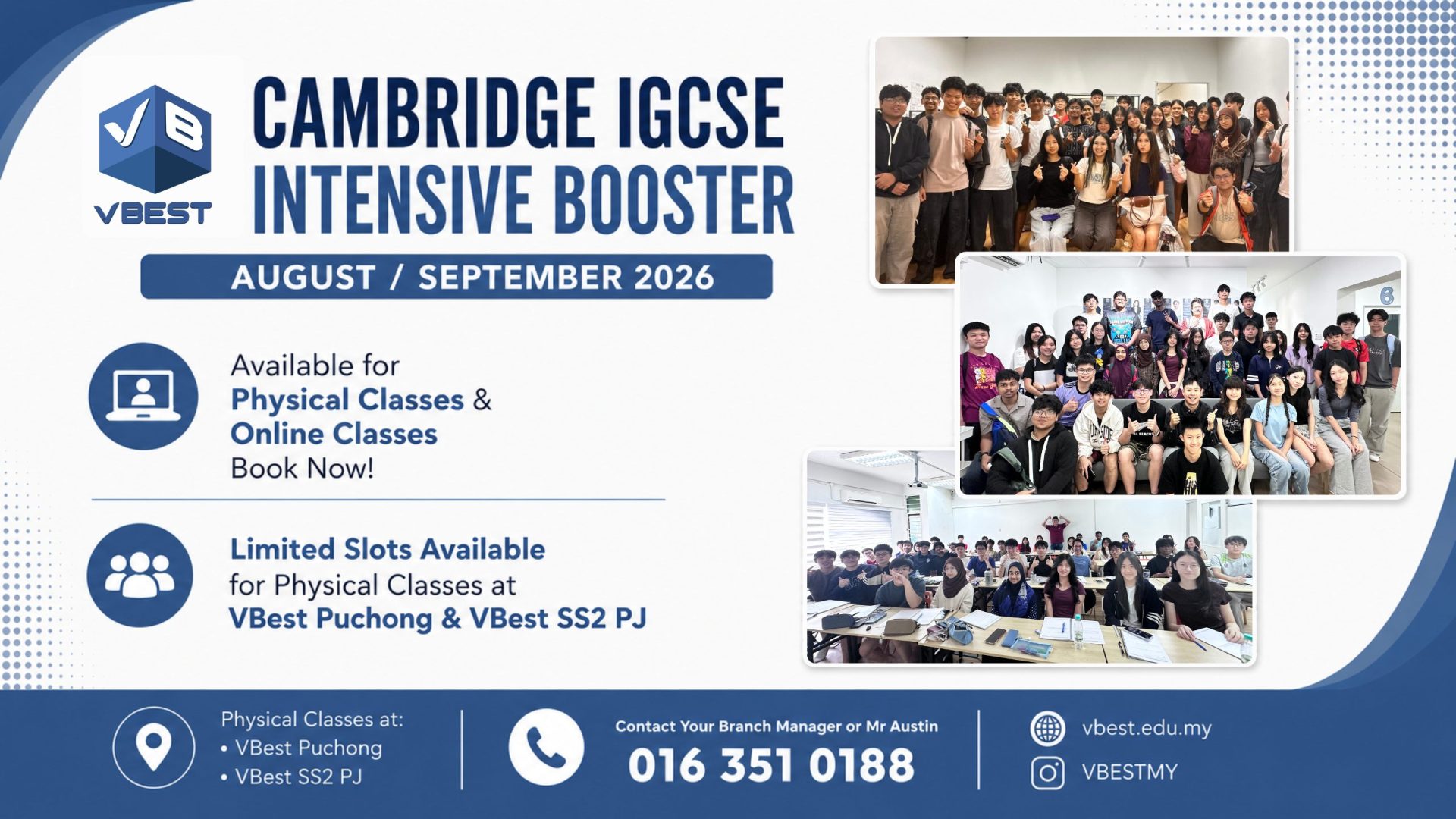
✨ With exams approaching, we’re excited to launch our Annual IGCSE Intensive Revision Programme 🎓 — designed specially for students preparing for the Oct/Nov 2026 IGCSE examination.
💡 This once-a-year programme gives students a solid revision of Year 10 & Year 11 topics
📘 Year 10 & 11 Topics: Intensive Booster
📝 Every student will receive a Special Year 10 & Year 11 Revision Booklet for each subject registered.
⚡ Key Details:
• 🎟 Limited seats for physical classes — first come, first served (with cleared payment).
• 💻 Early bird (Physical and Online) for Vbest students: 19th – 21st Jun 2026
• ⏰ Registration closes: 28th Jun 2026
• 📦 Intensive booklets (for online students) will be delivered starting 27th July 2026
🚀 Don’t miss this opportunity to strengthen revision and build exam confidence! Secure your slot now before they’re gone!
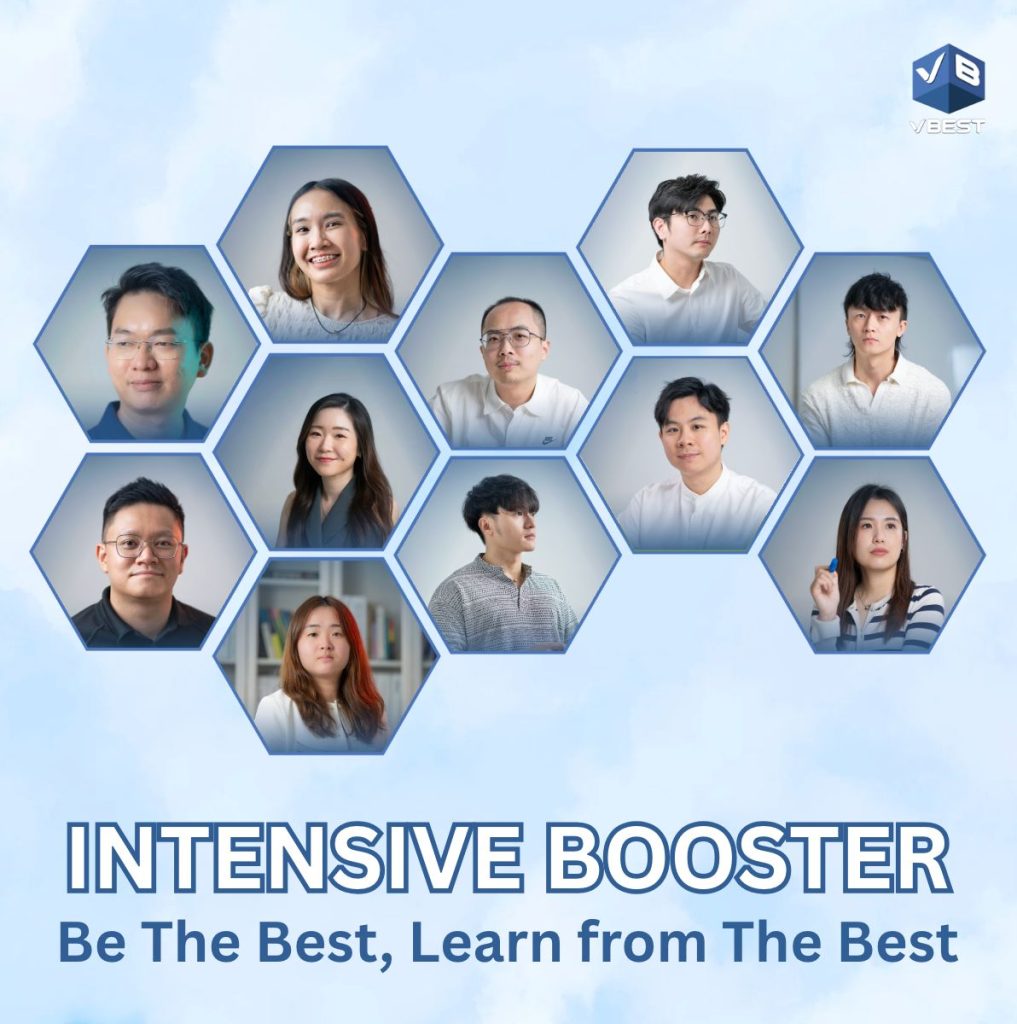
1. Top Experienced Academic Directors & Senior Tutors
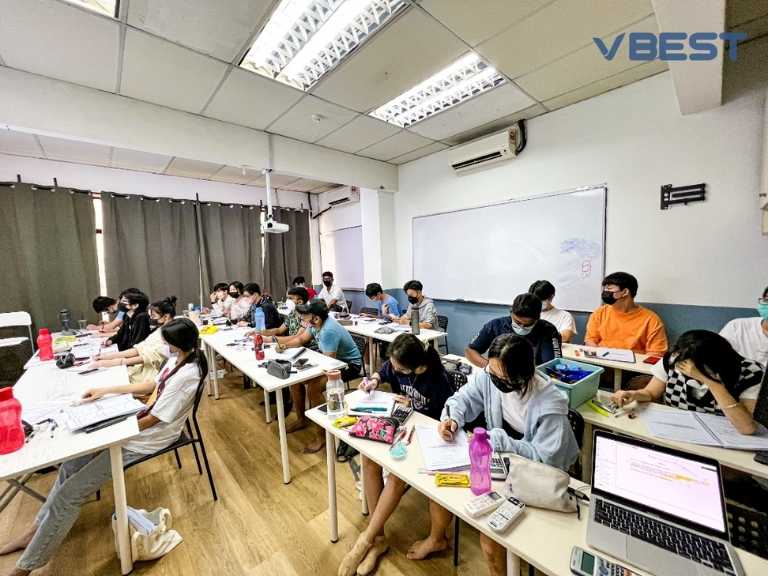
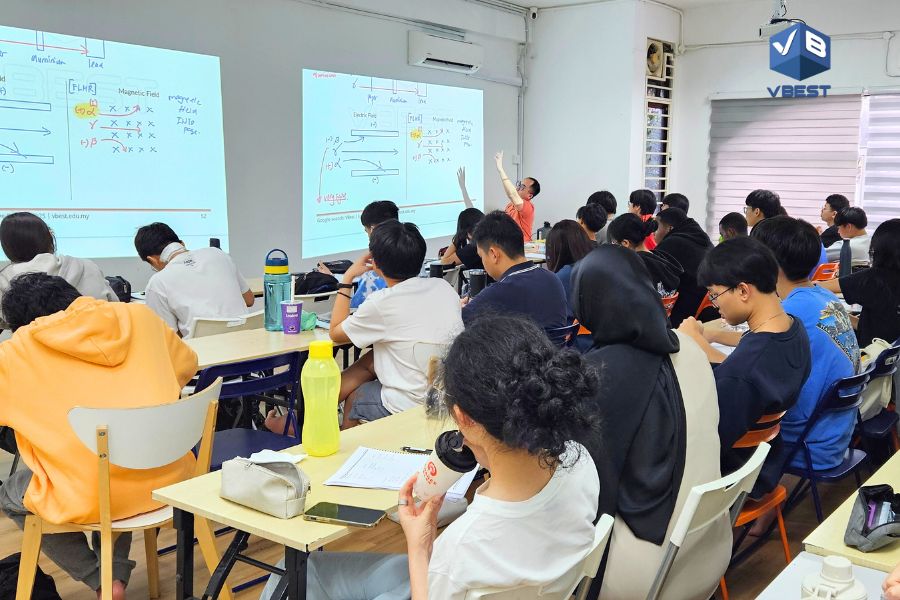
Intensive IGCSE courses are taught by teachers with more than 10,000 teaching hours and conducted classes as big as 200+ students.
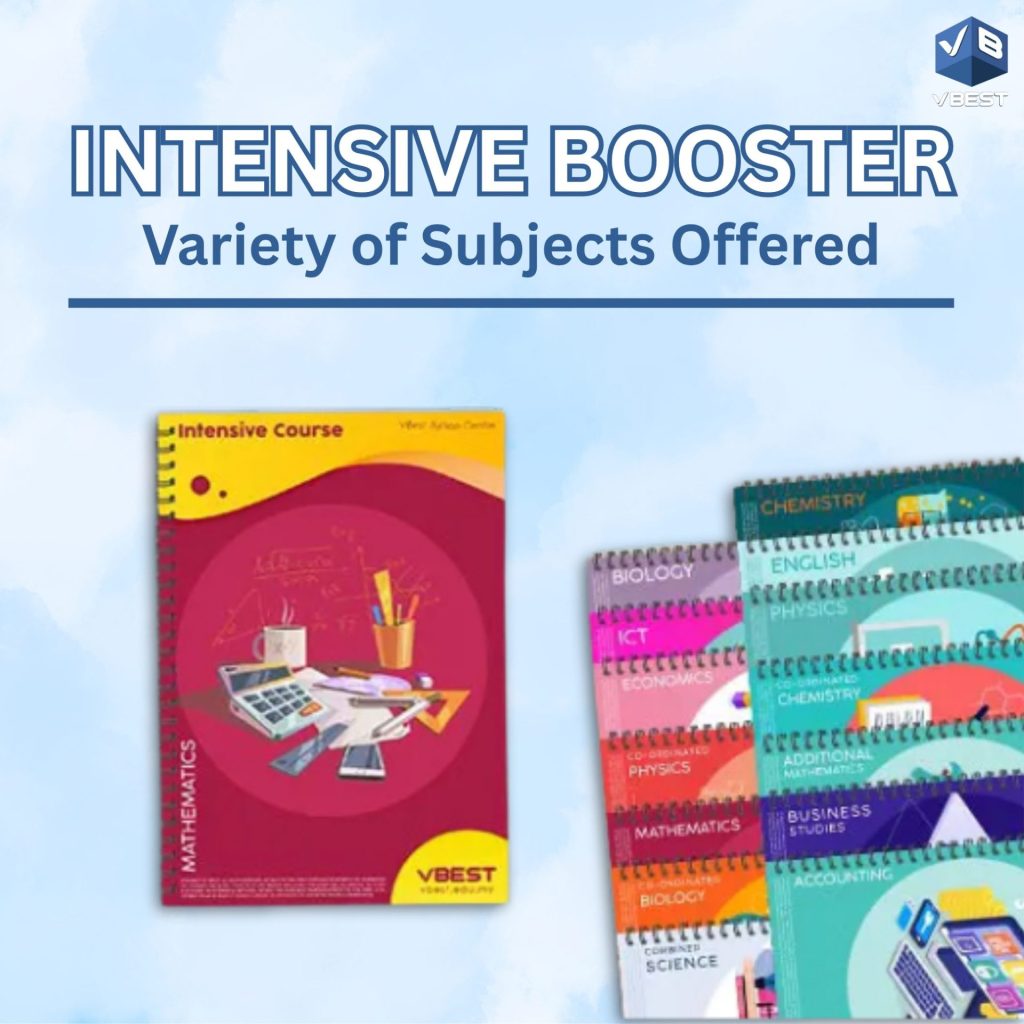
2. Variety of Subjects Offered
We offer 9 subjects which are popular IGCSE subjects.
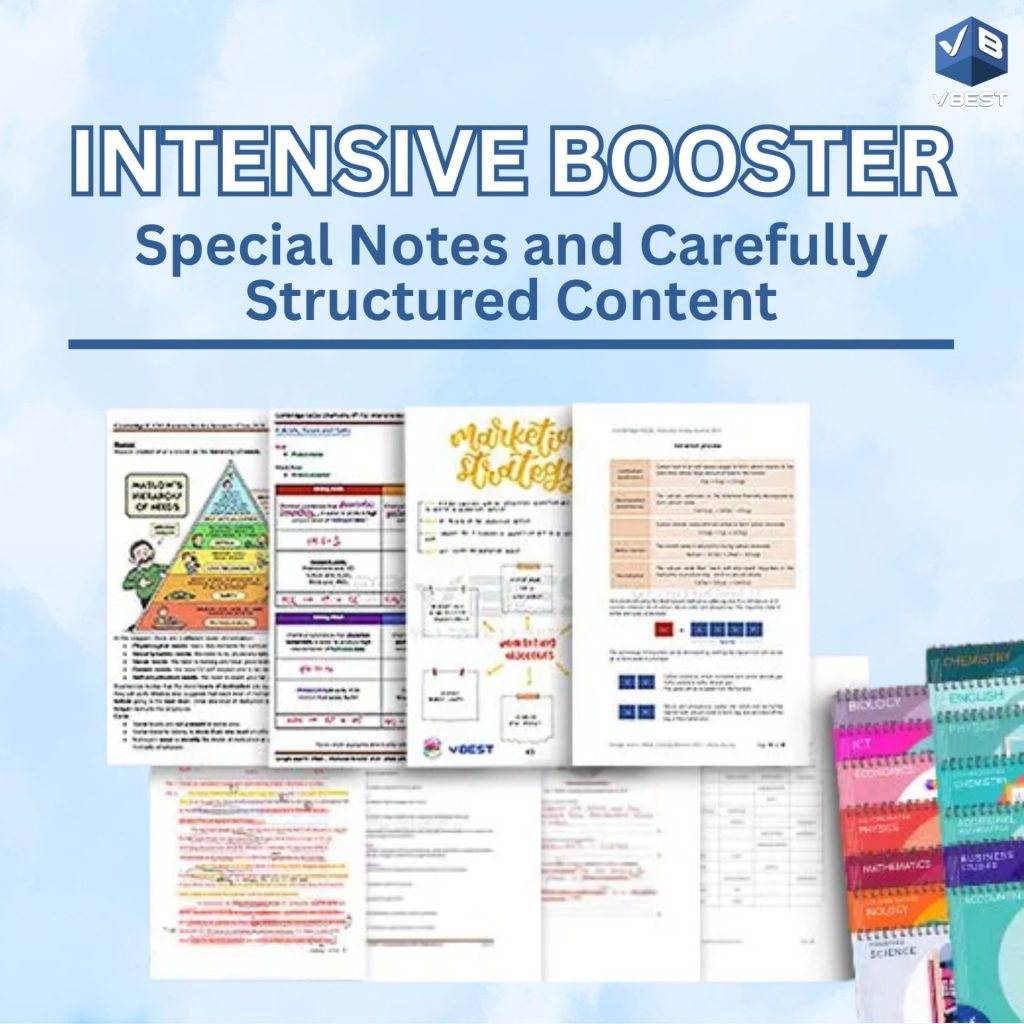
3. Special Notes and Carefully Structured Content
Notes are prepared by academic director which are packed with tips and tricks to score A*. Color pages (for selective subjects) , compact notes and contents are carefully structured to help students learn in the shortest time.
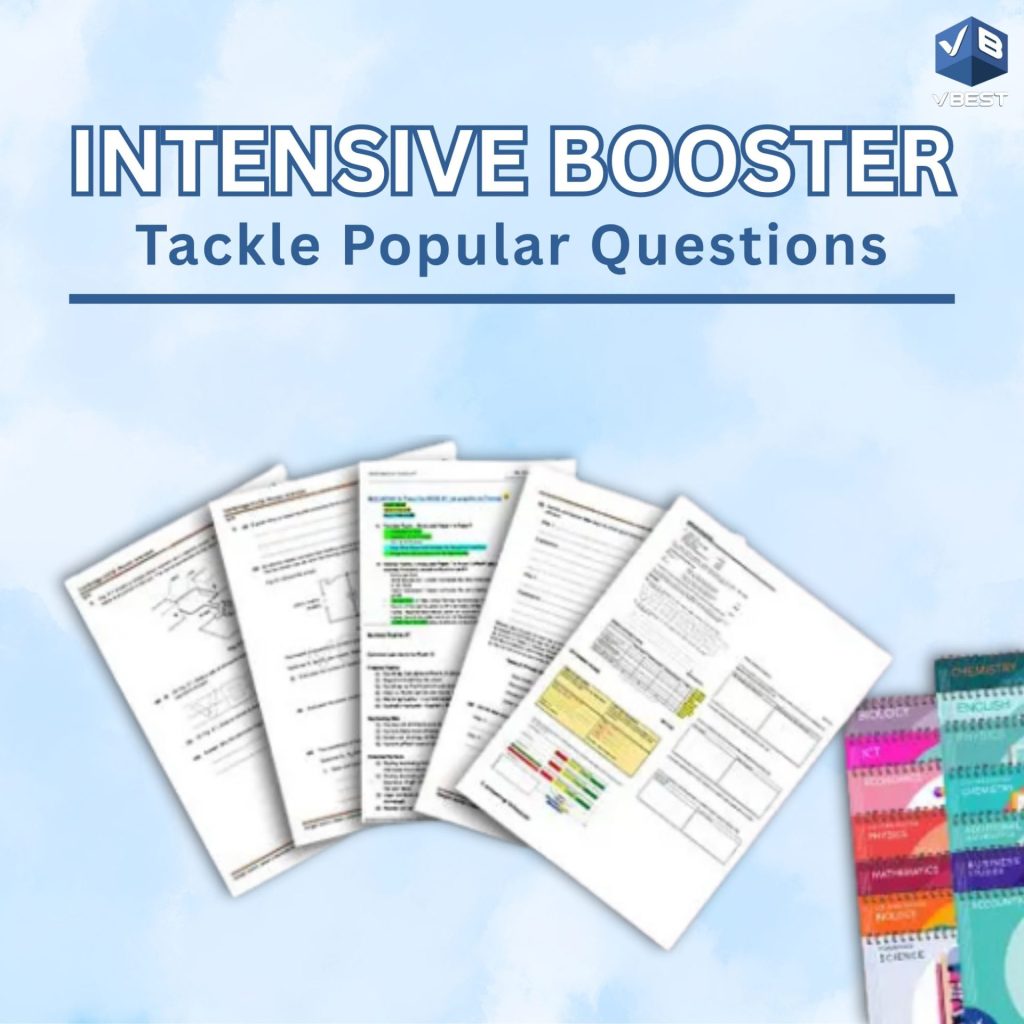
4. Tackle Popular Questions
Popular questions are hand-picked from 15 years of past year papers to prepare students to tackle the most difficult questions possible.
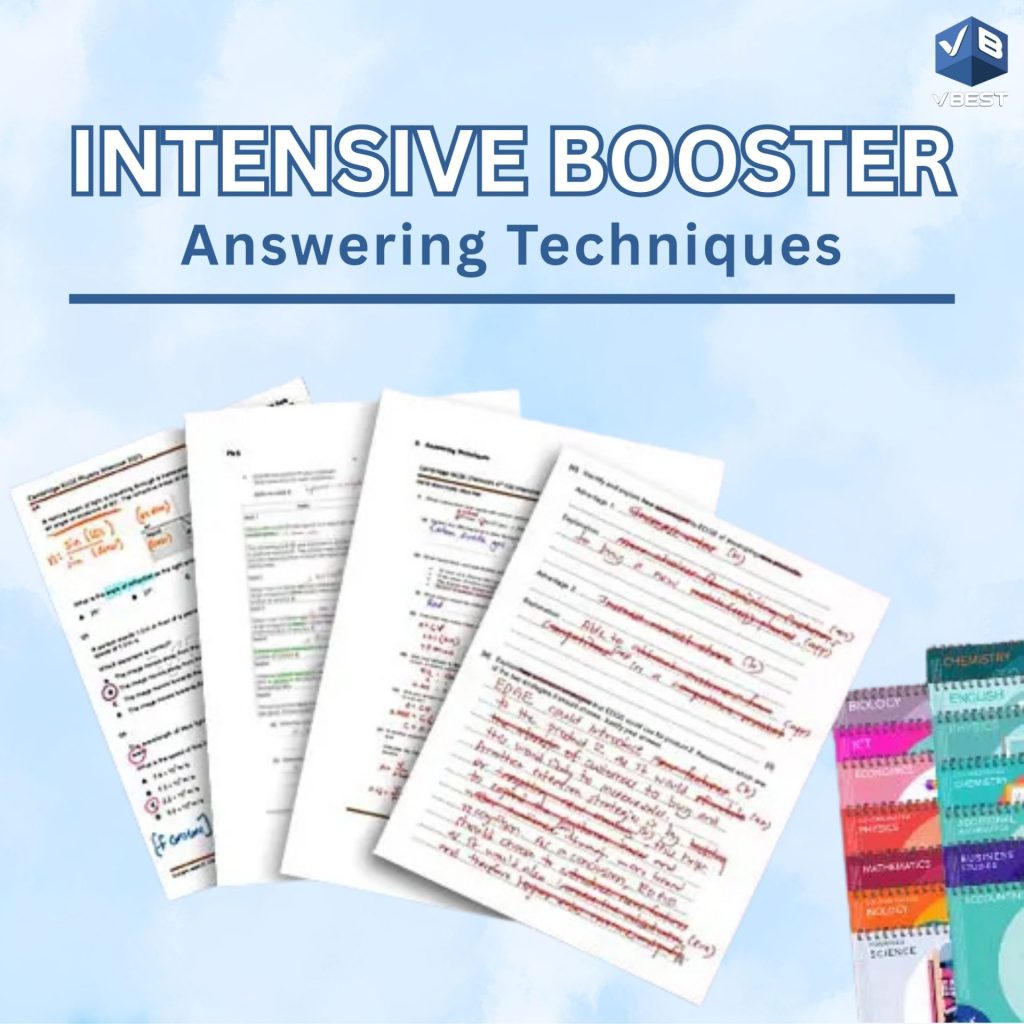
5. Answering Techniques
Students will learn how to write the perfect answer which allows the IGCSE examiners to award them full marks.
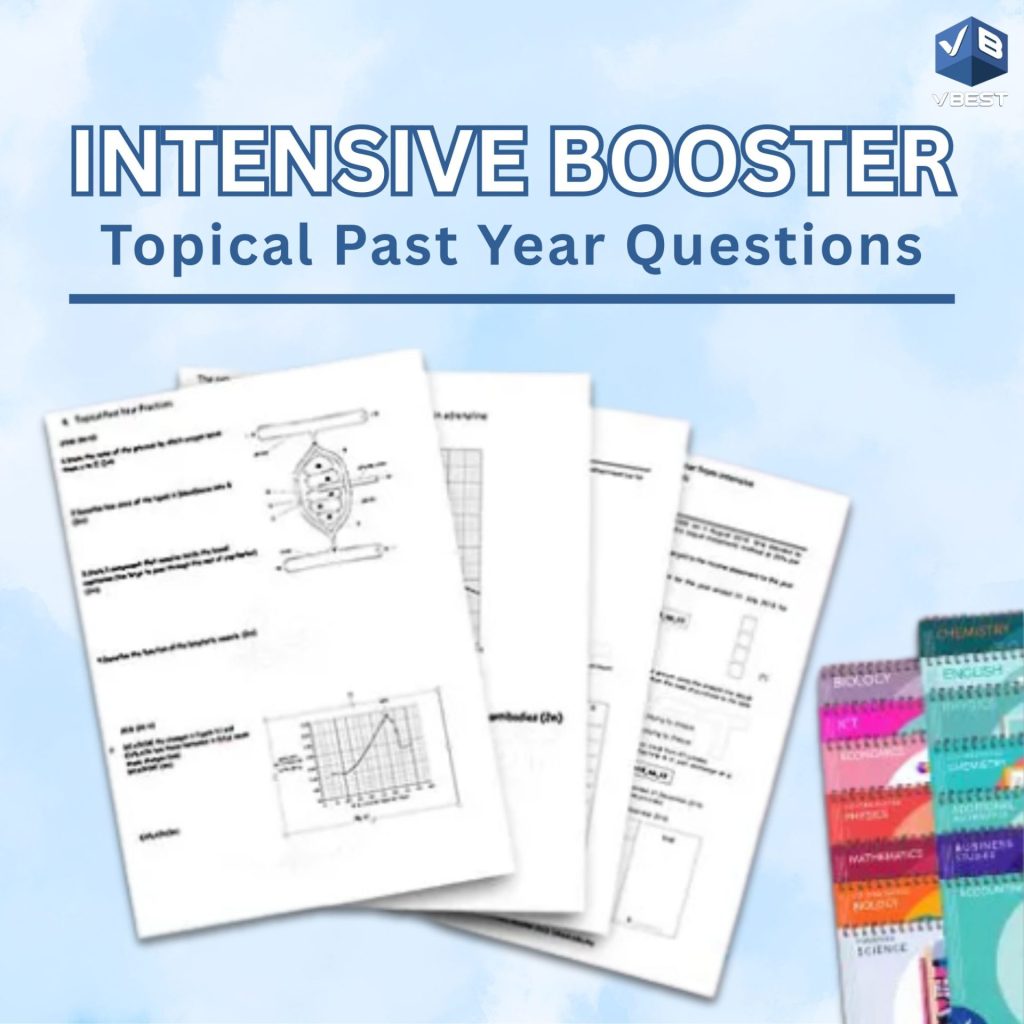
6. Topical Past Year Practices
By discussing past years, patterns and questioning approaches, students can expect what is coming out in their exams.
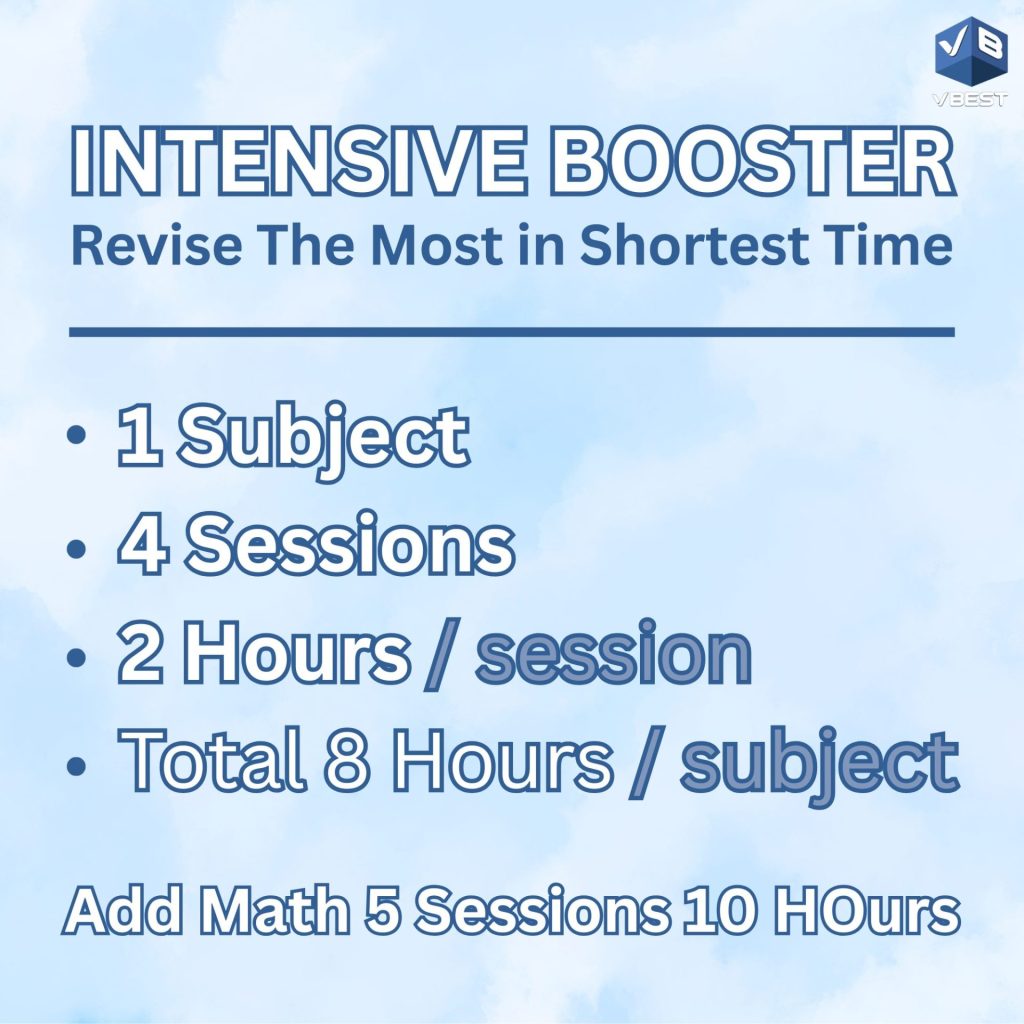
7. Revise The Most In Shortest Time
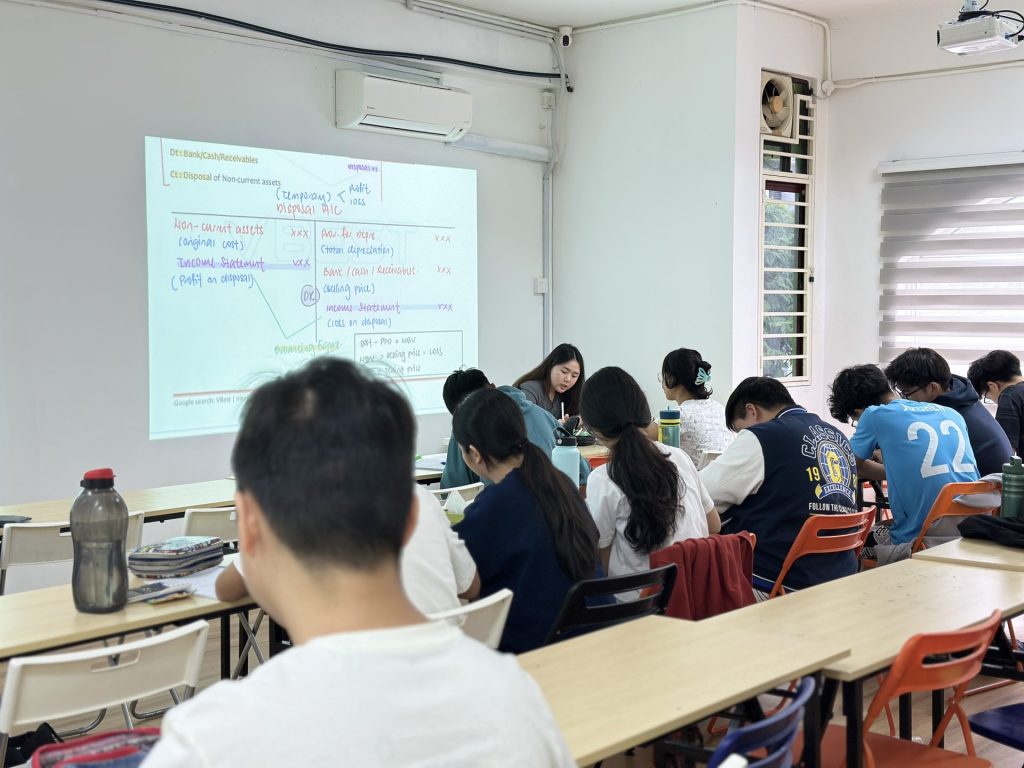
With a total of 8 hours per subject, our lessons are one of the most efficient and energy packed.
Being taught by academic directors with vast experience is one of the key success of our students
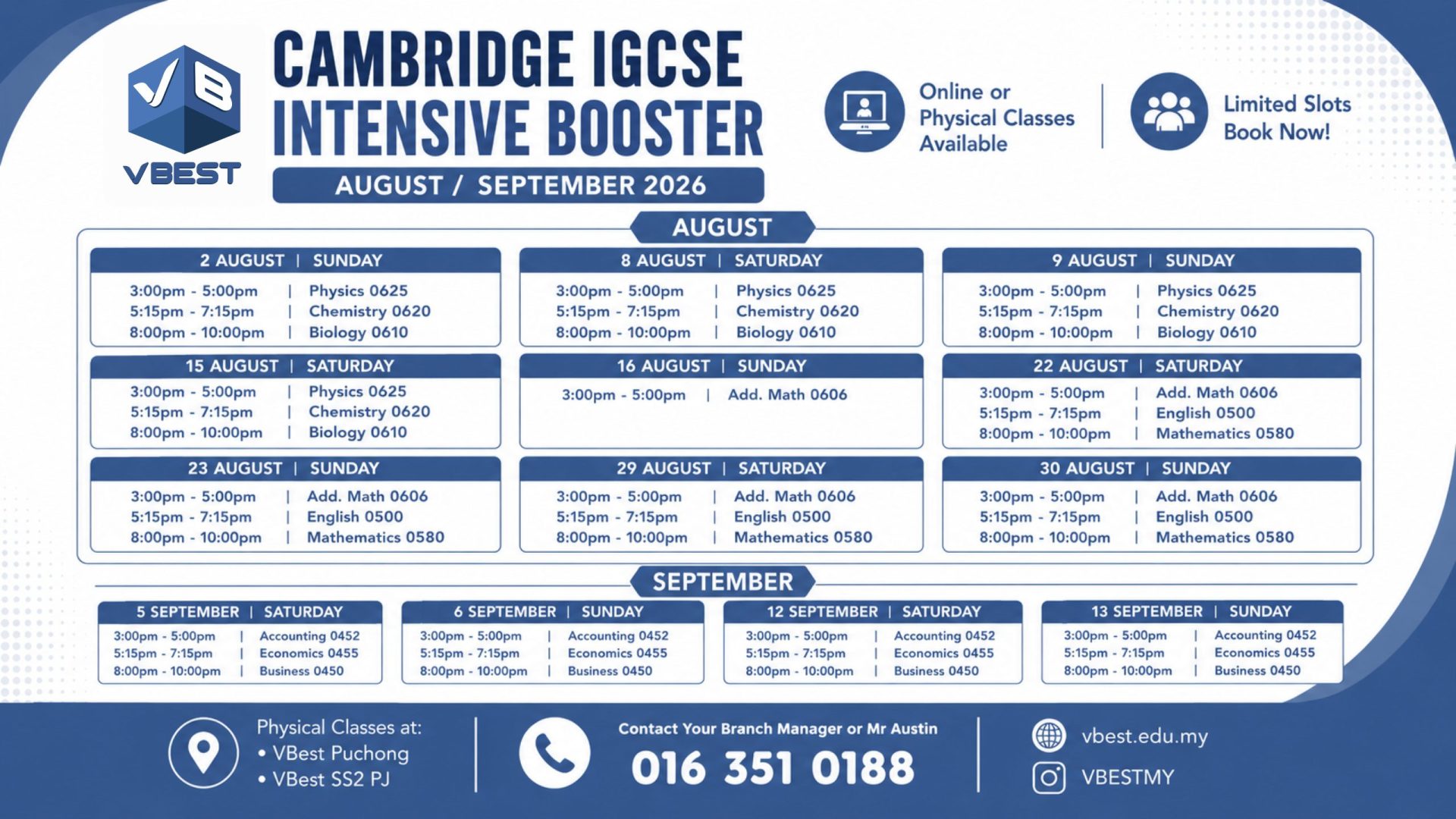
Booster Schedule
Scroll To Top
Reviews
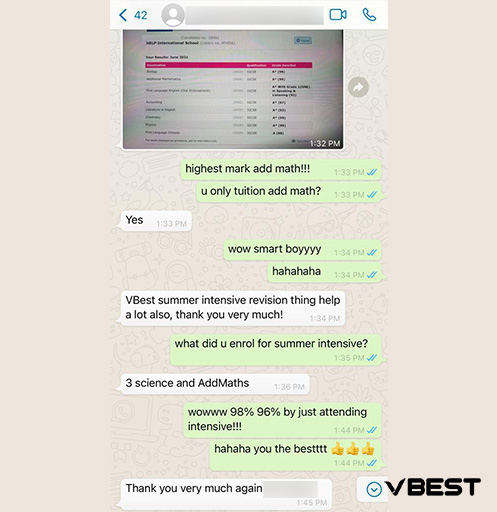
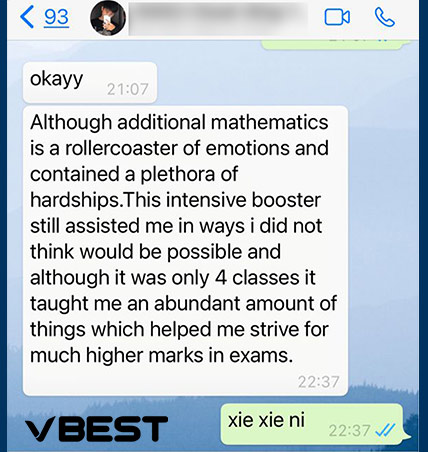
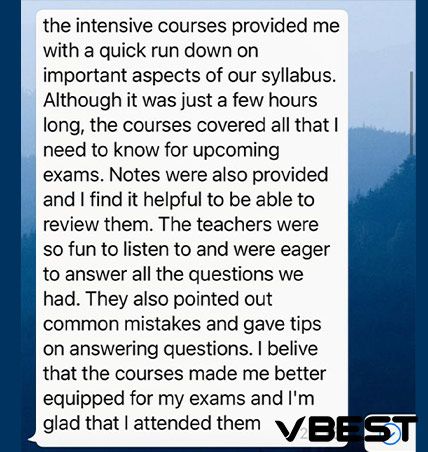
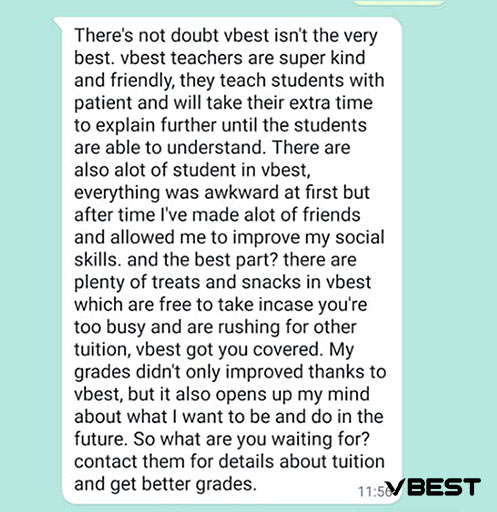
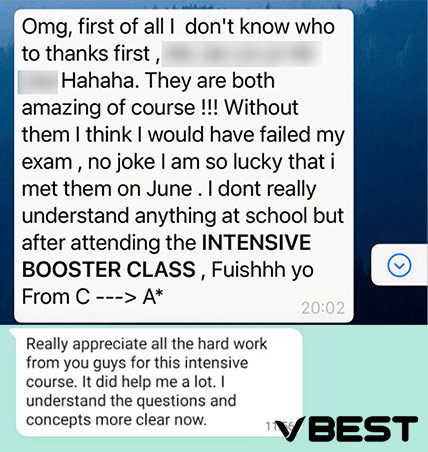
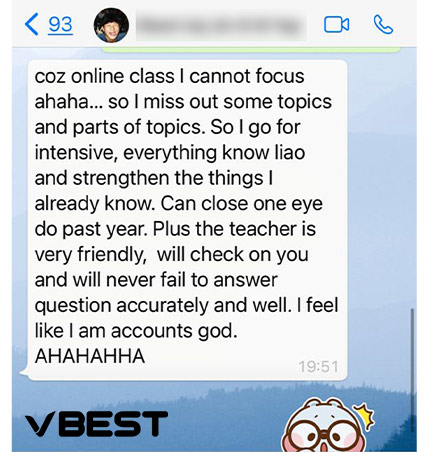
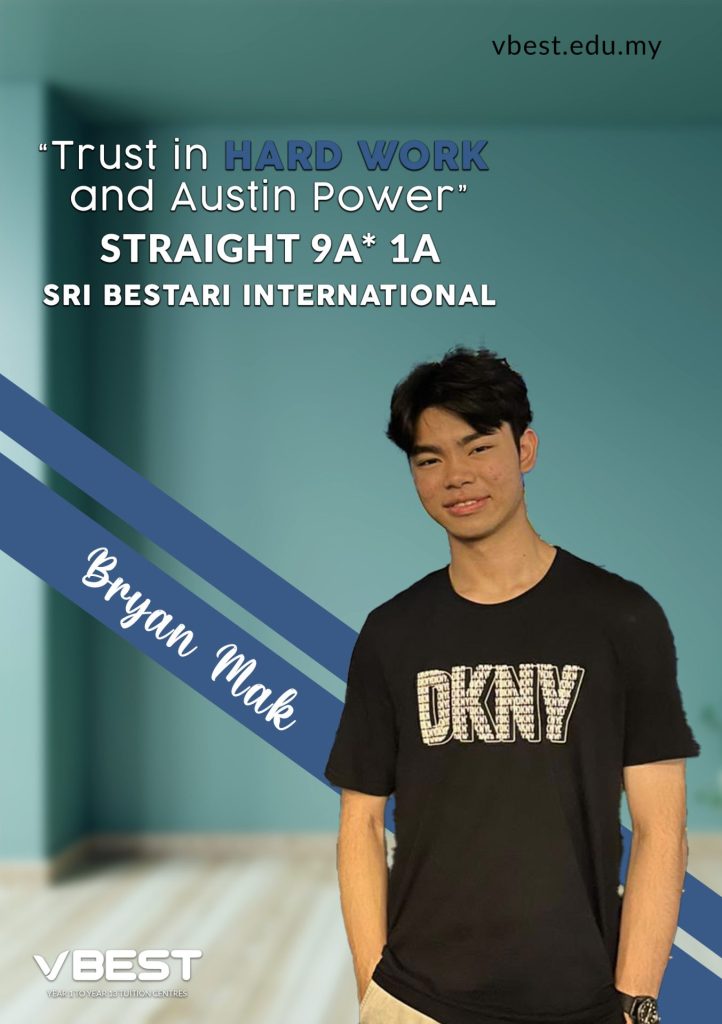
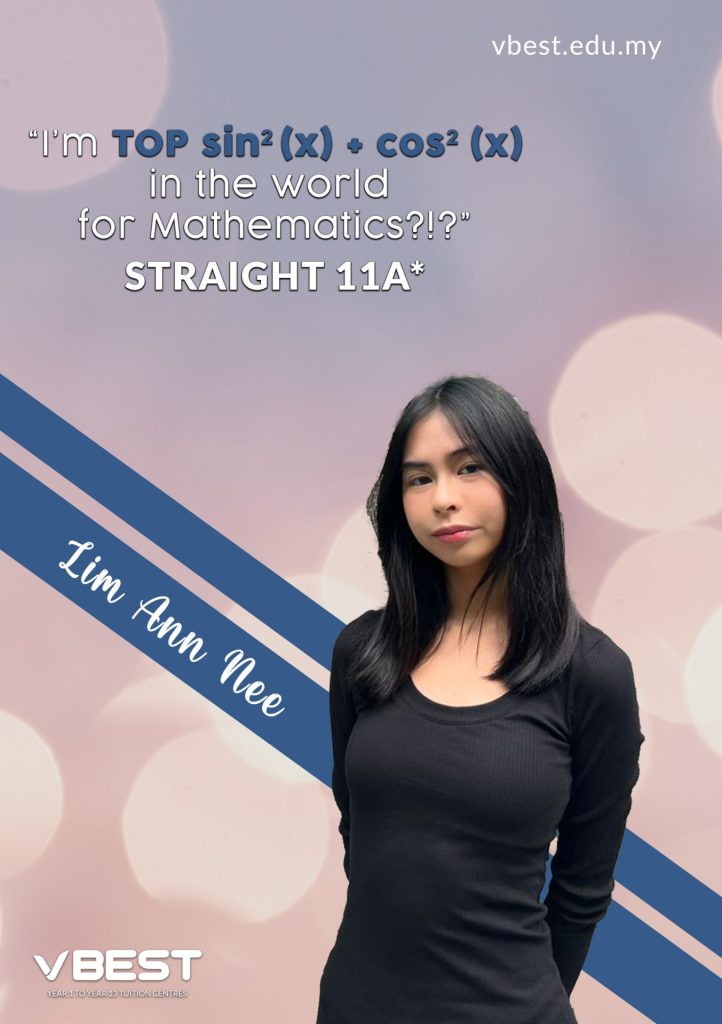
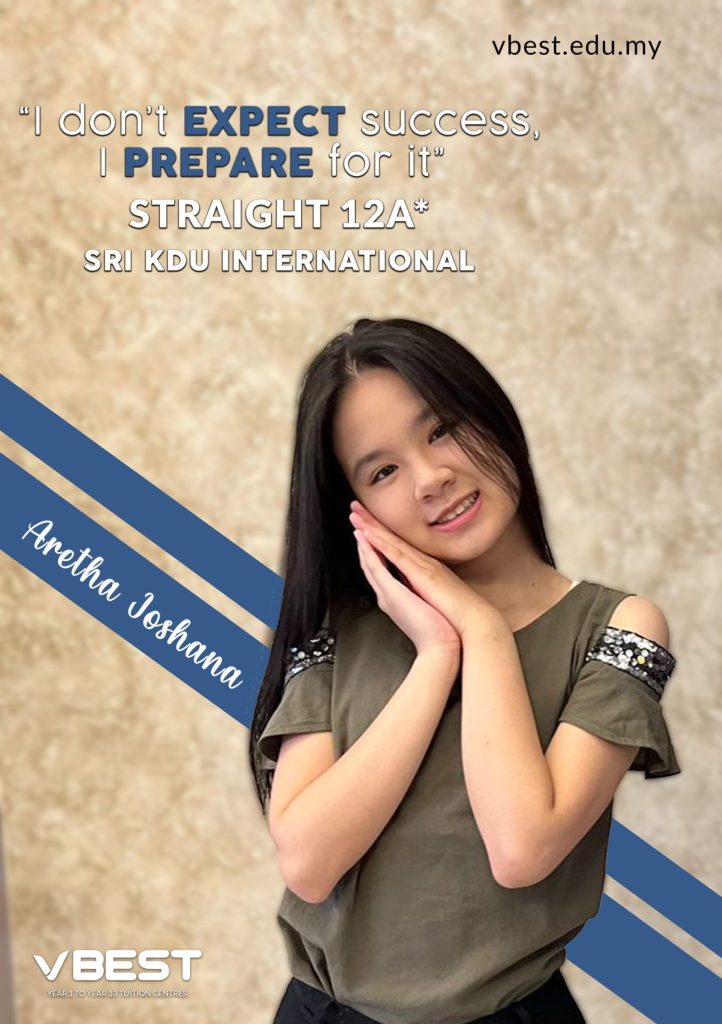
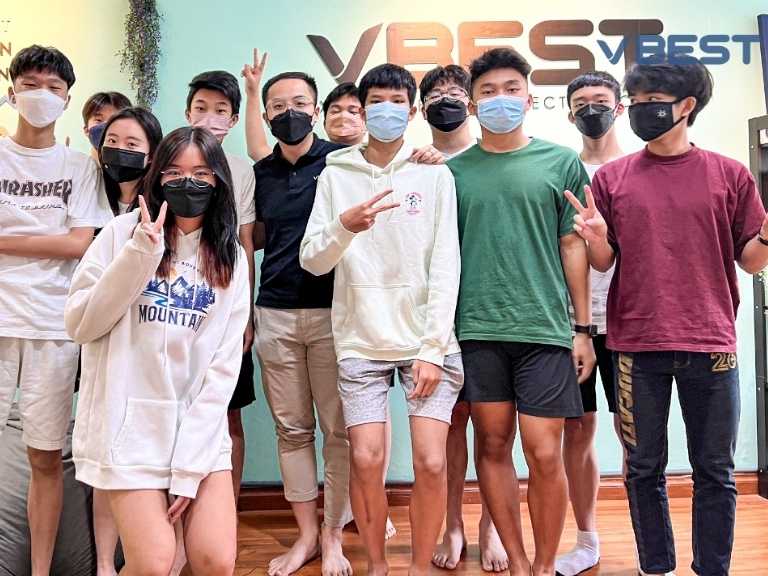
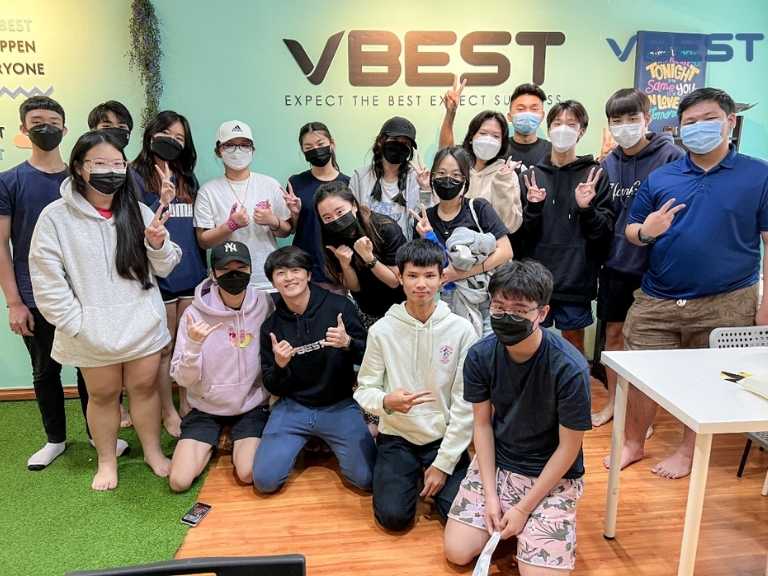
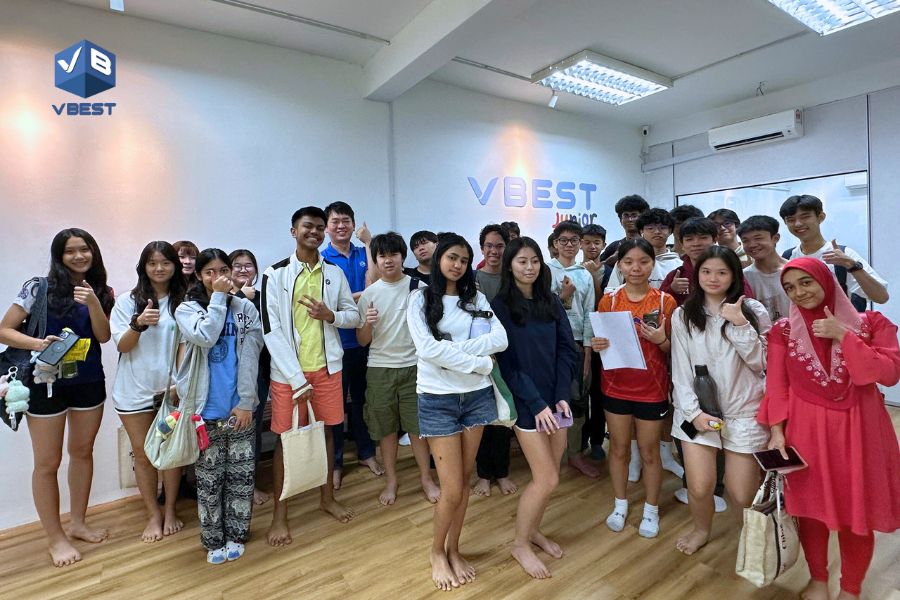
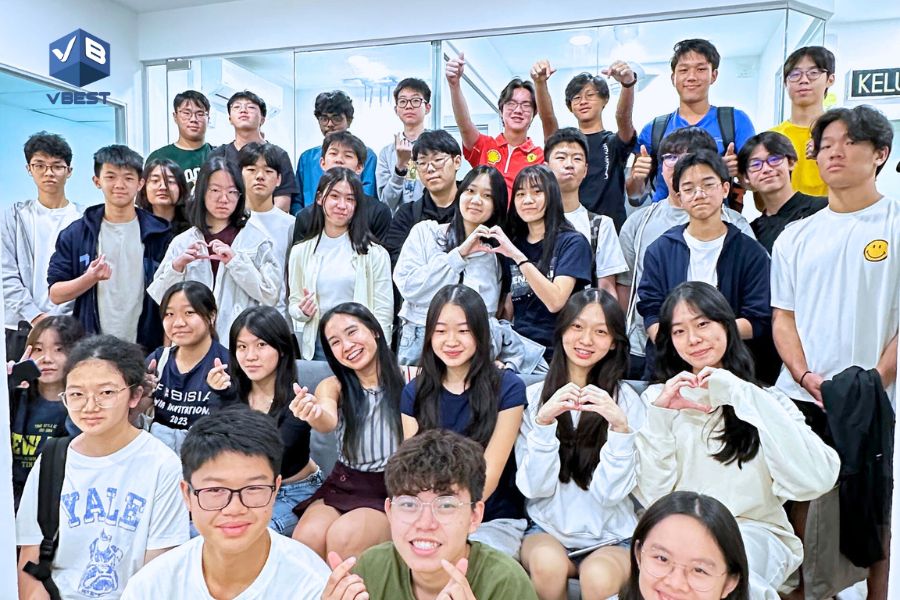
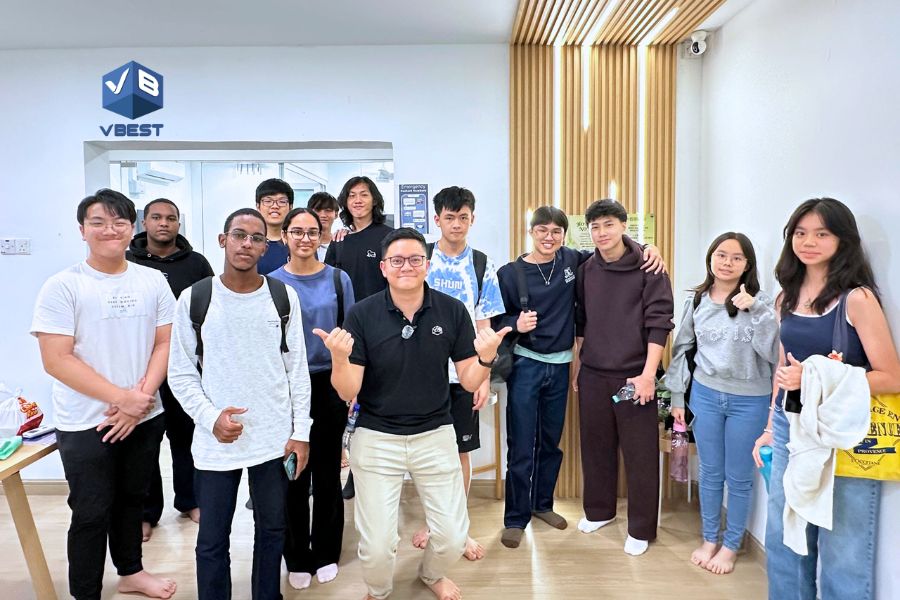
Students who have attended the intensive course and scored well for the exam.
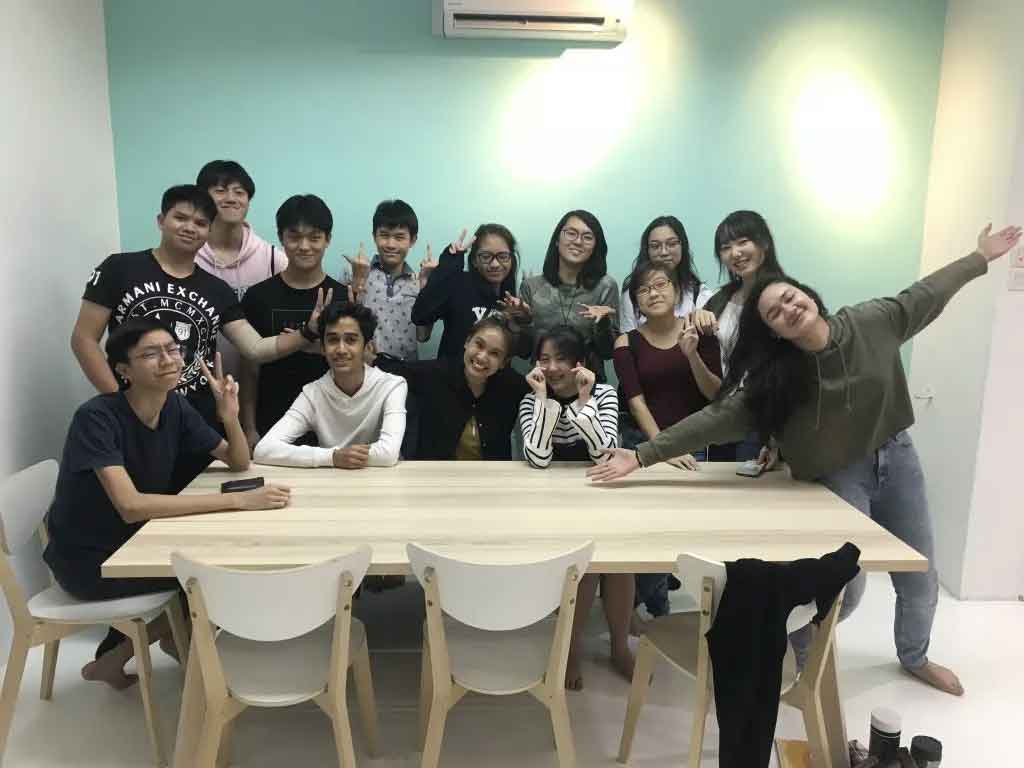
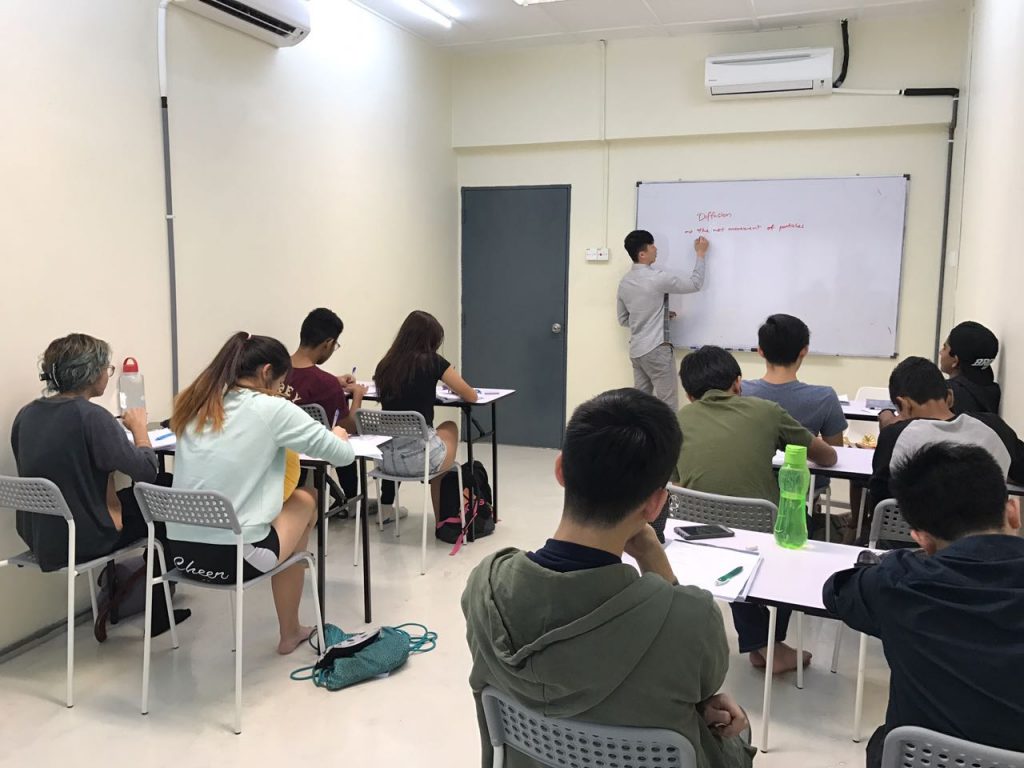
Past Intensive Booster 2017 – 2025
Pricing
Whatsapp 0163510188 or Contact respective Branch Manager to know more about pricing
List of Topics
Subjects
Puchong Tutors
SS2 Tutors
Chapters
Accounting
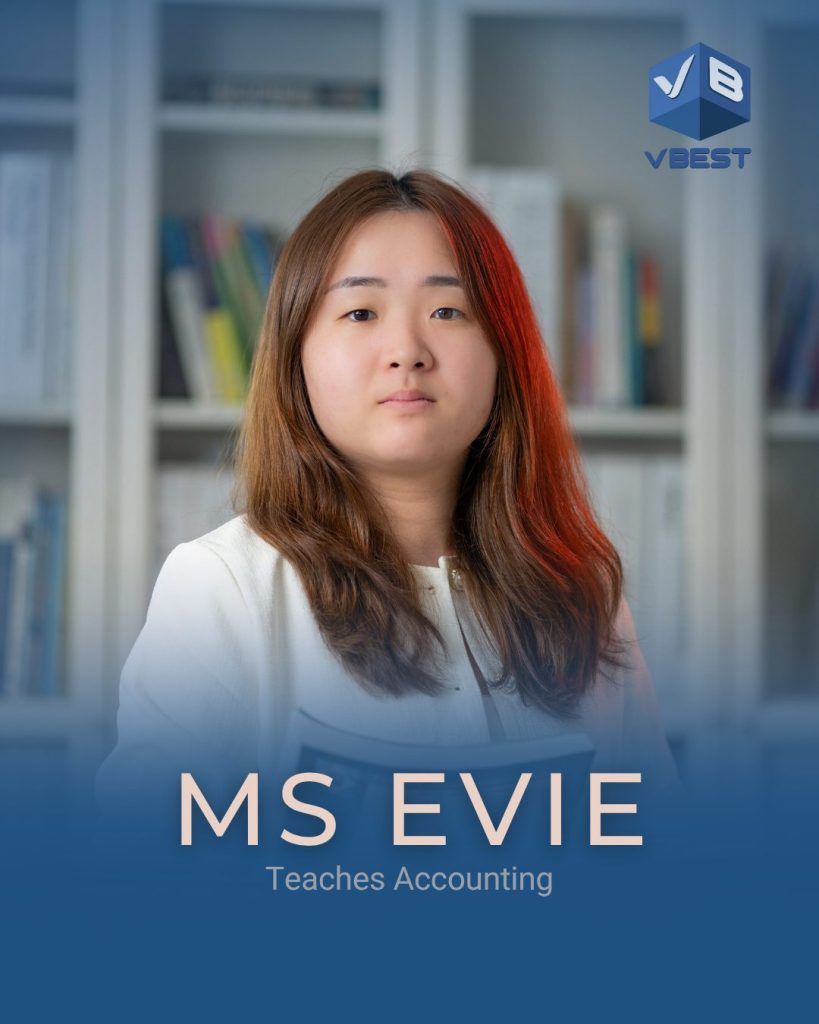
Ms Evie
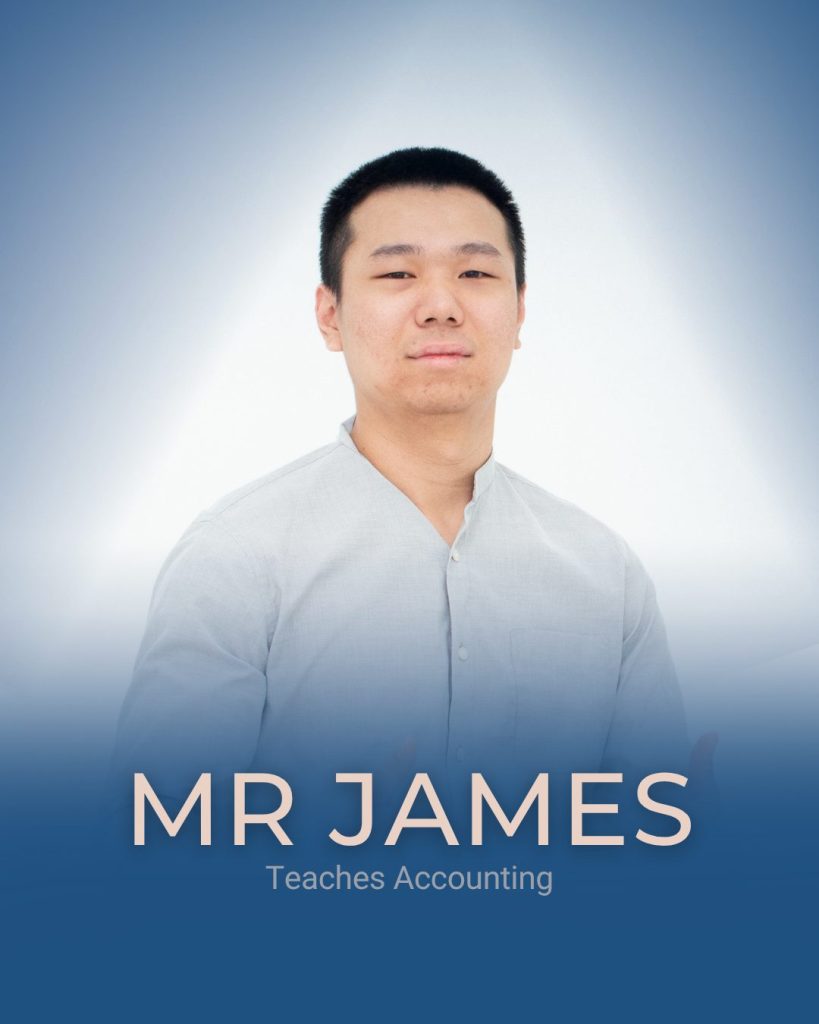
Mr James
1 The fundamentals of accounting
- The Purpose of Accounting
- Accounting Equation
2 Sources and recording of data
- Double Entry System of Book-keeping
- Business Documents
3 Verification of accounting records
- Trial Balance
- Bank Reconciliation
- Correction of Errors
- Control Accounts
4 Accounting procedures
- Capital and Revenue expenditure and receipts
- Accounting for depreciation and disposal of non-current assets
- Other receivables and other payables
- Irrecoverable debts and provision for doubtful debts
- Valuation of Inventory
5 Preparation of financial statements
- Sole traders
- Partnerships
- Limited companies
- Clubs and societies
- Manufacturing accounts
- Incomplete records
6 Ratio and Analysis
- Calculation and understanding of accounting ratios
- Interpretation of accounting ratios
7 Accounting Principles and policies
Add Maths
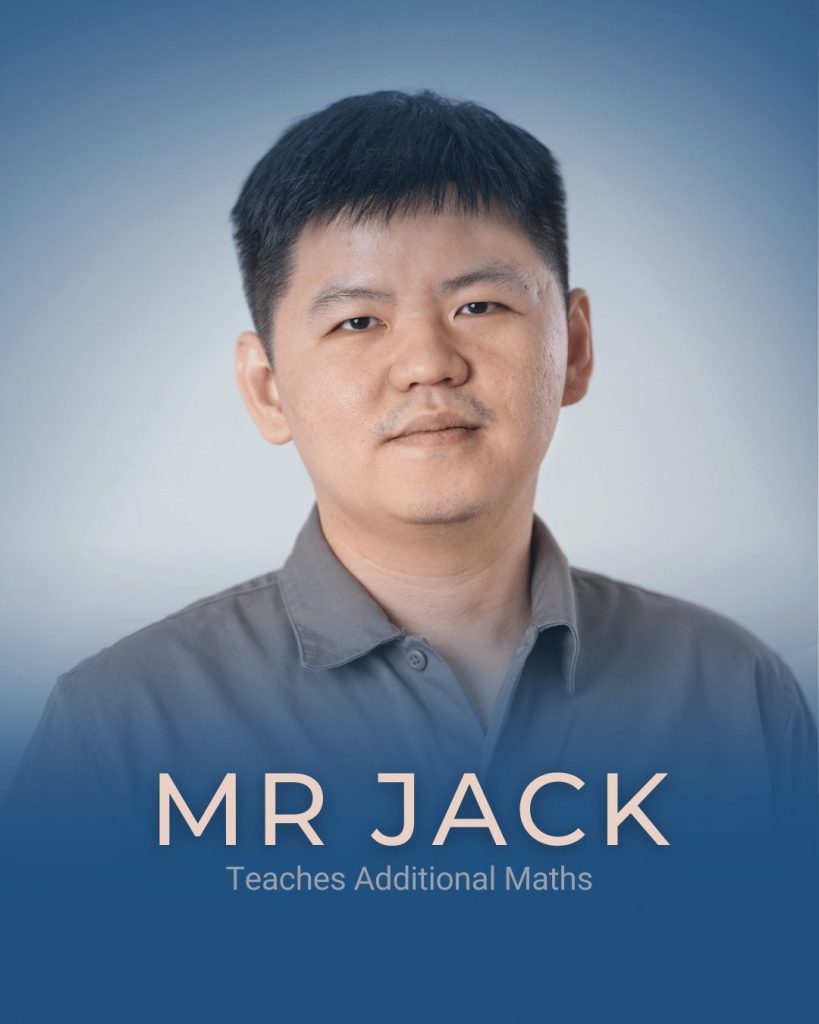
Mr Jack
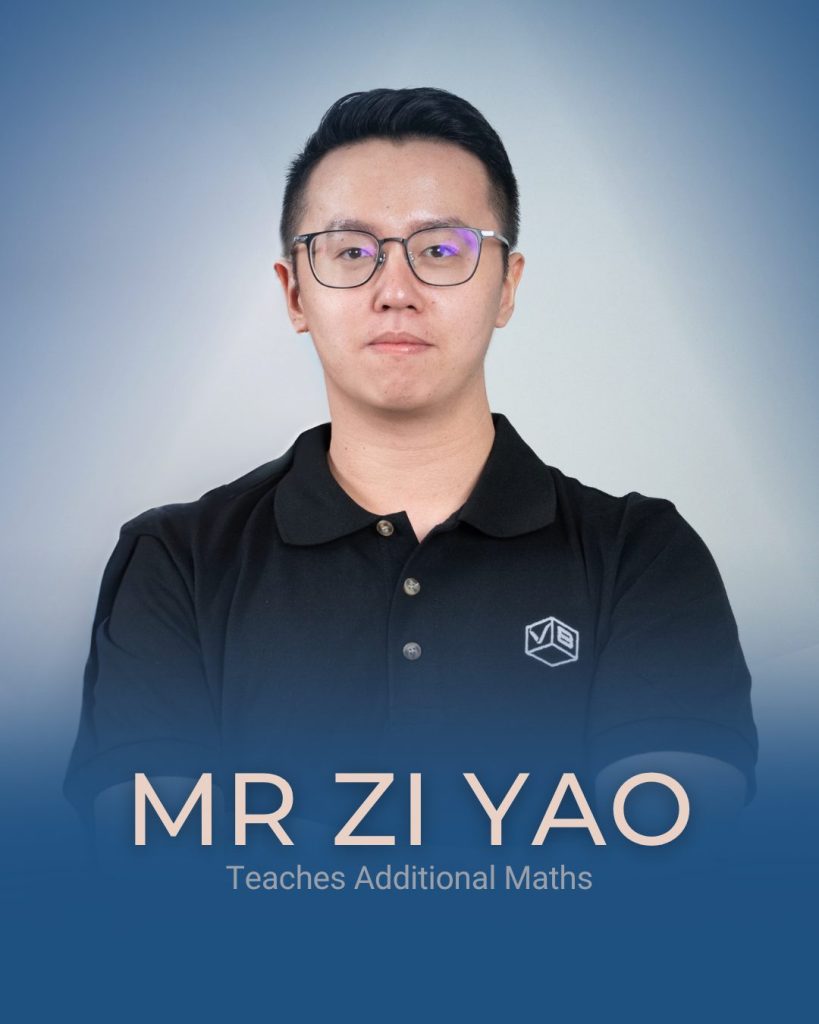
Mr Zi Yao
Function
Quadratic Functions
Quadratic Equations & Inequalities
Logarithmic And Exponential Function
Equations, Inequalities And Graphs
Indices And Logarithms
Circular Measure
Permutation And Combination
Binomial Theorem
Arithmetic Series & Geometric Series
Remainder And Factor Theorem
Coordinate Geometry
Linear Law
Trigonometry
Differentiation
Integration
Kinematics
Velocity Vector
Vector
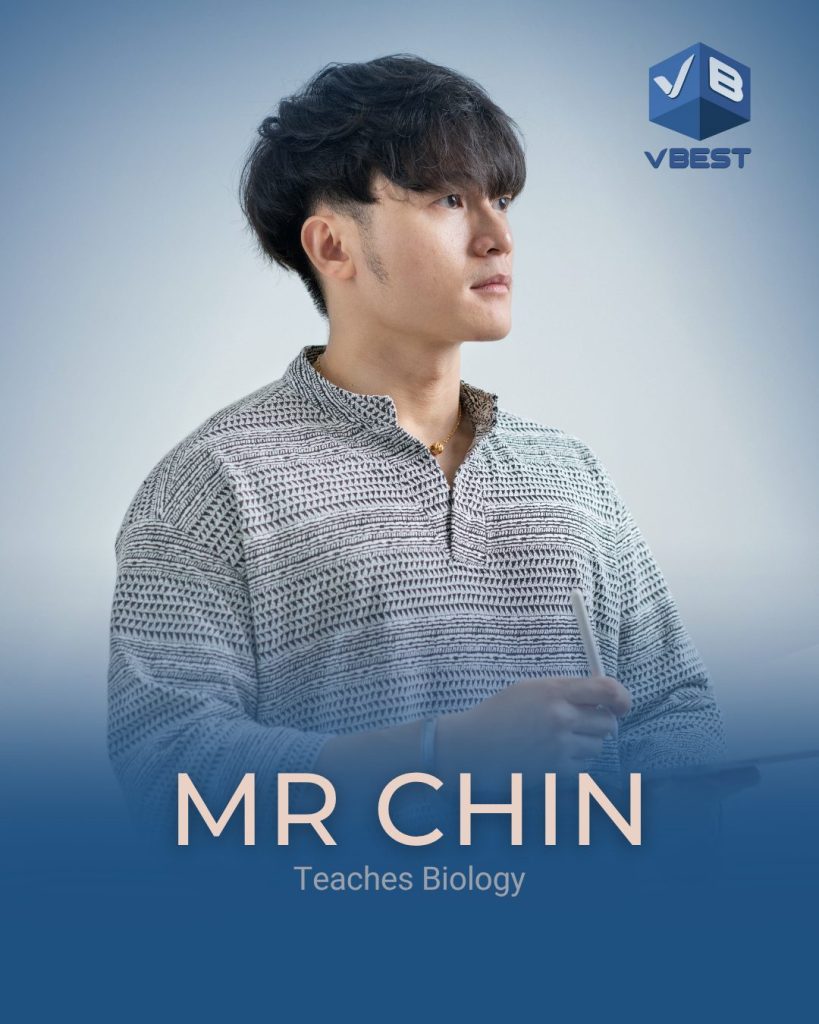
Biology
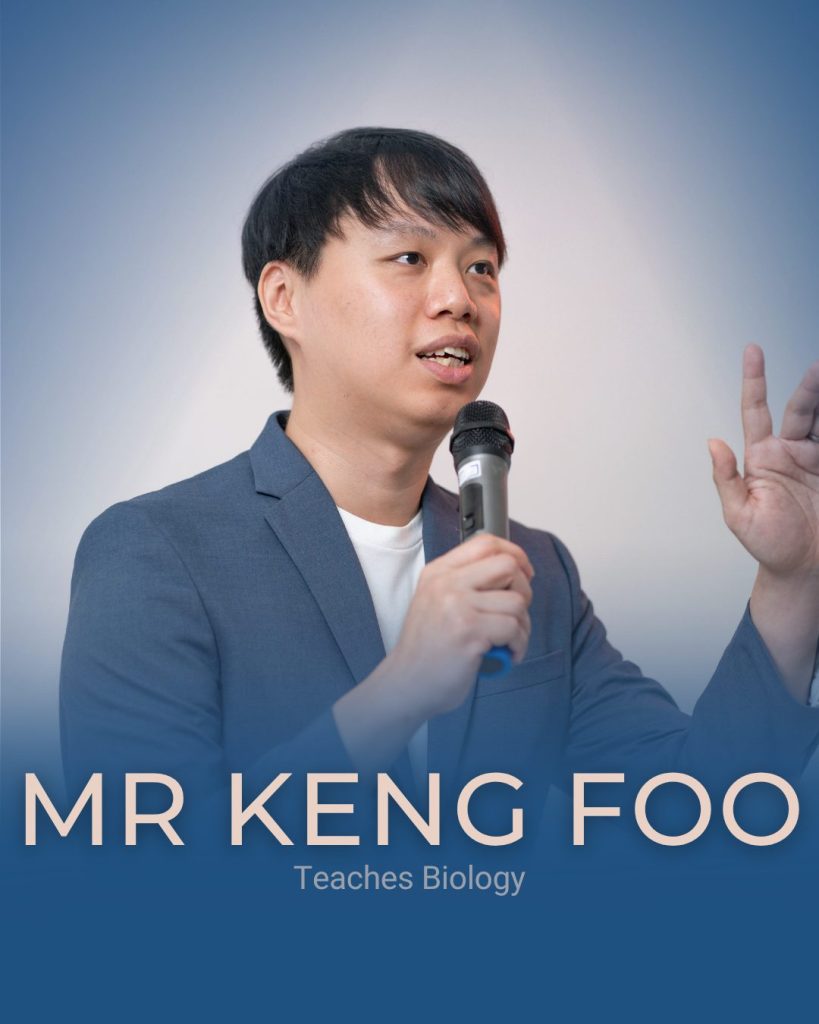
Mr Chin & Mr Keng Foo
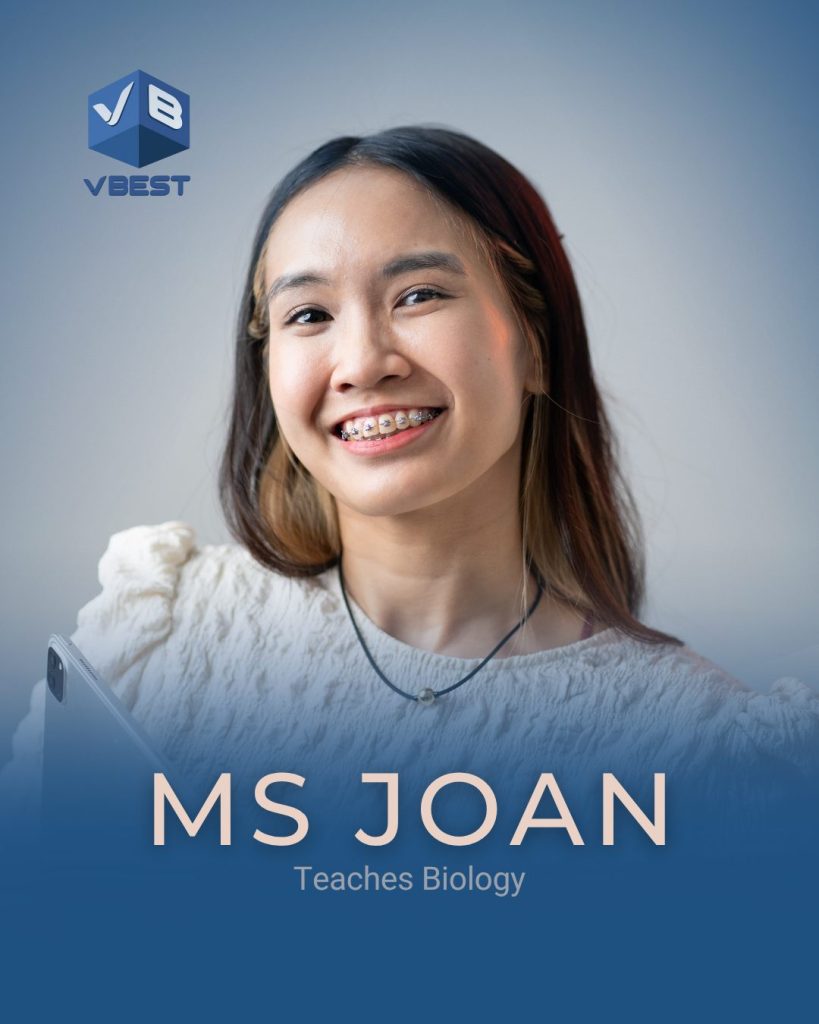
Ms Joan
1 Characteristics and classification of living organisms
2 Organisation of the organism
3 Movement in and out of cells
4 Biological molecules
5 Enzymes
6 Plant nutrition
7 Human nutrition
8 Transport in plants
9 Transport in animals
10 Diseases and immunity
11 Gas exchange in humans
12 Respiration
13 Excretion in humans
14 Coordination and response
15 Drugs
16 Reproduction
17 Inheritance
18 Variation and selection
19 Organisms and their environment
20 Human influences on ecosystems
21 Biotechnology and genetic modification
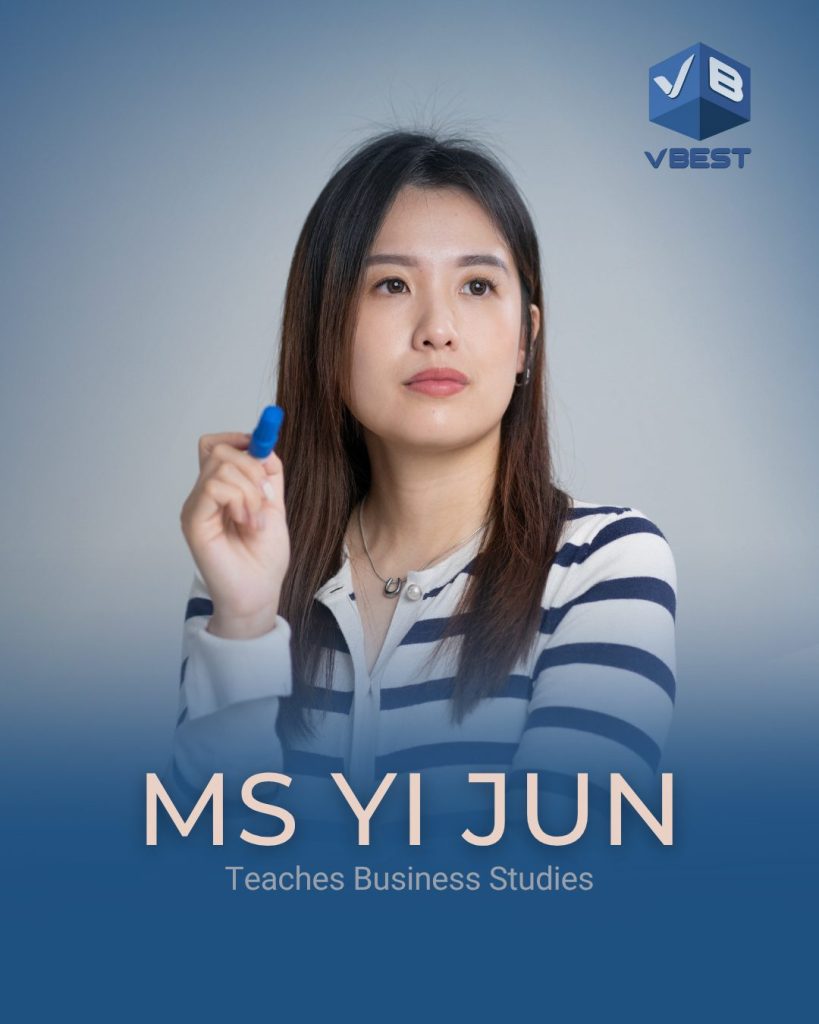
Business Studies
Ms Yi Jun
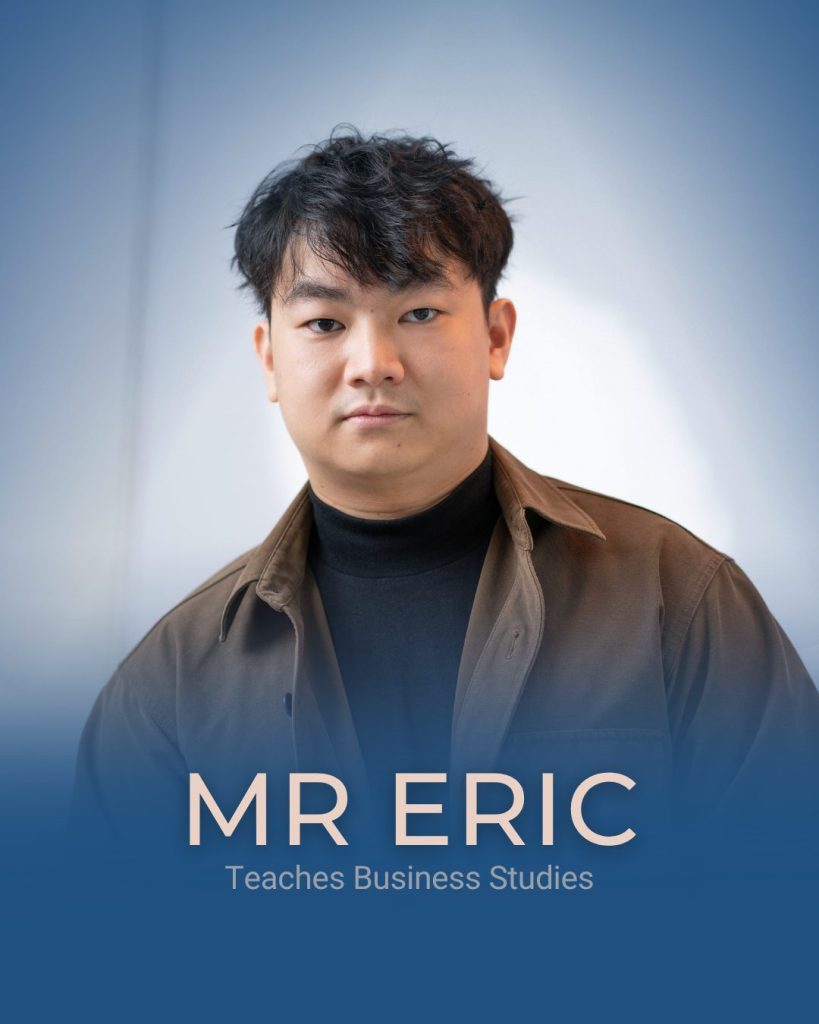
Mr Eric
1. Understanding business activity
- Business activity
- Classification of business
- Enterprise, business growth and size
- Types of business organisation
- Business objectives and stakeholders objectives
2. People in business
- Motivating employees
- Organisation and management
- Recruitment, selection and training of employees
- Internal and external communication
3. Marketing
- Marketing, competition and the customer
- Market research
- Marketing mix
- Marketing strategy
4. Operations Mangement
- Production of Goods and Services
- Cost, Scale of Production and Breakeven Analysis
- Achieving Quality Production
- Location Decisions
5. Financial Informations and Decisions
- Business Finance: Needs and Sources
- Cash Flow Forecasting and Working Capital
- Income Statement
- Statement of Financial Position
- Analysis of Accounts
6. External Influences on Business Activity
- Economics Issues
- Environmental and Ethical Issues
- Business and the International Economy
Chemistry
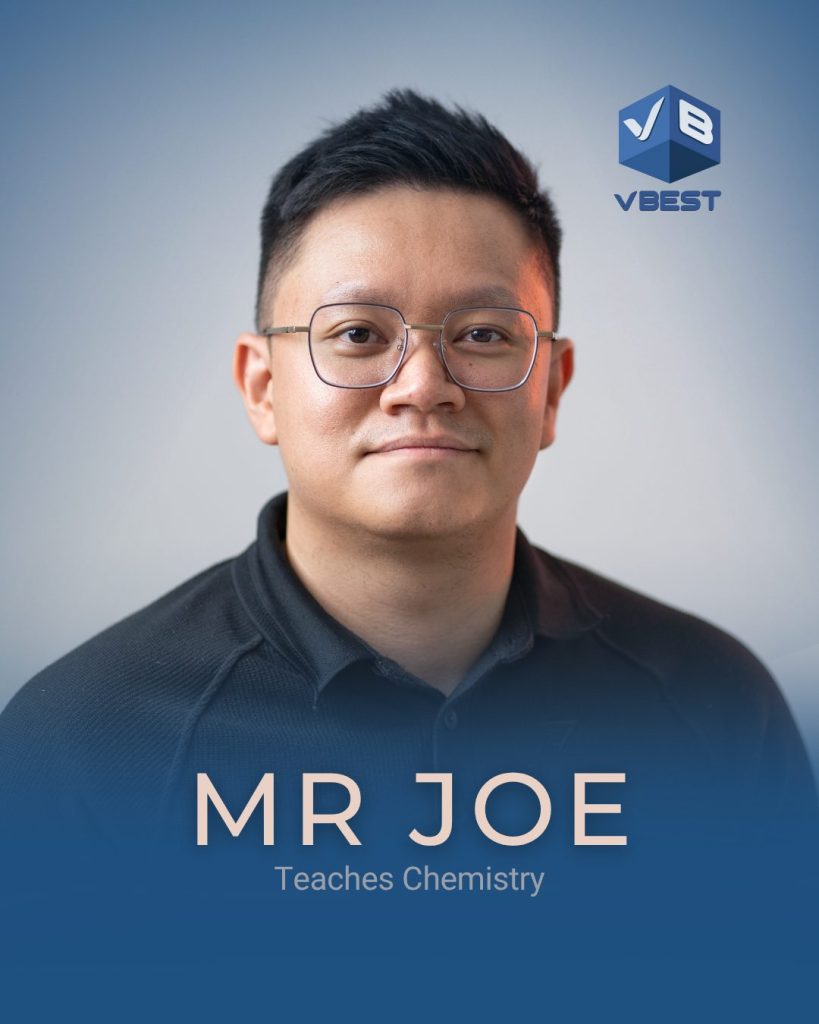
Mr Joe
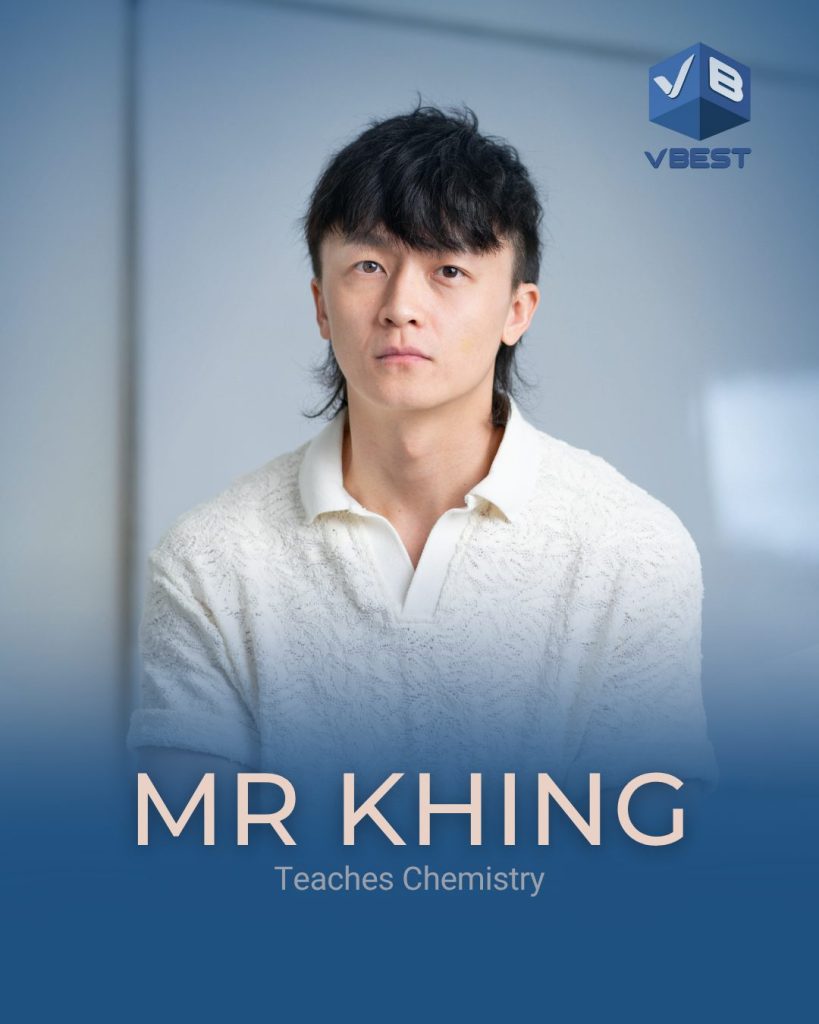
Mr Khing
1 States of matter
2 Atoms, elements and compounds
3 Stoichiometry
4 Electrochemistry
5 Chemical energetics
6 Chemical reactions
7 Acids, bases and salts
8 The Periodic Table
9 Metals
10 Chemistry of the environment
11 Organic chemistry
12 Experimental techniques and chemical analysis
Economics
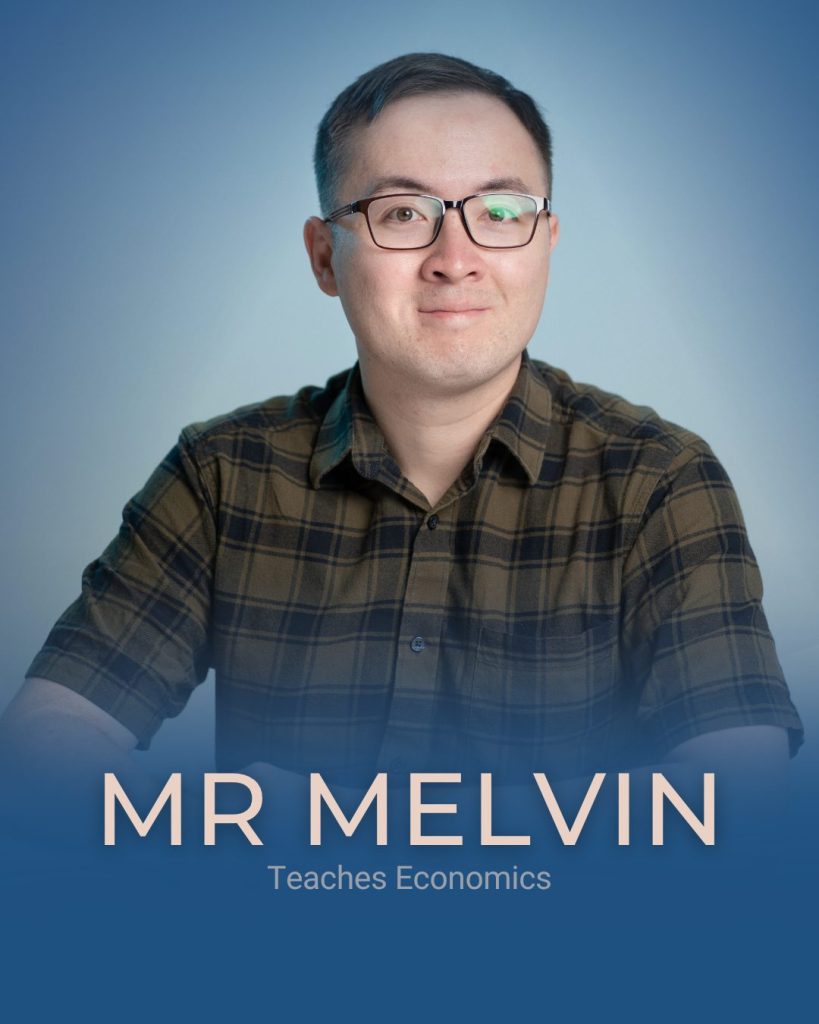
Mr Melvin
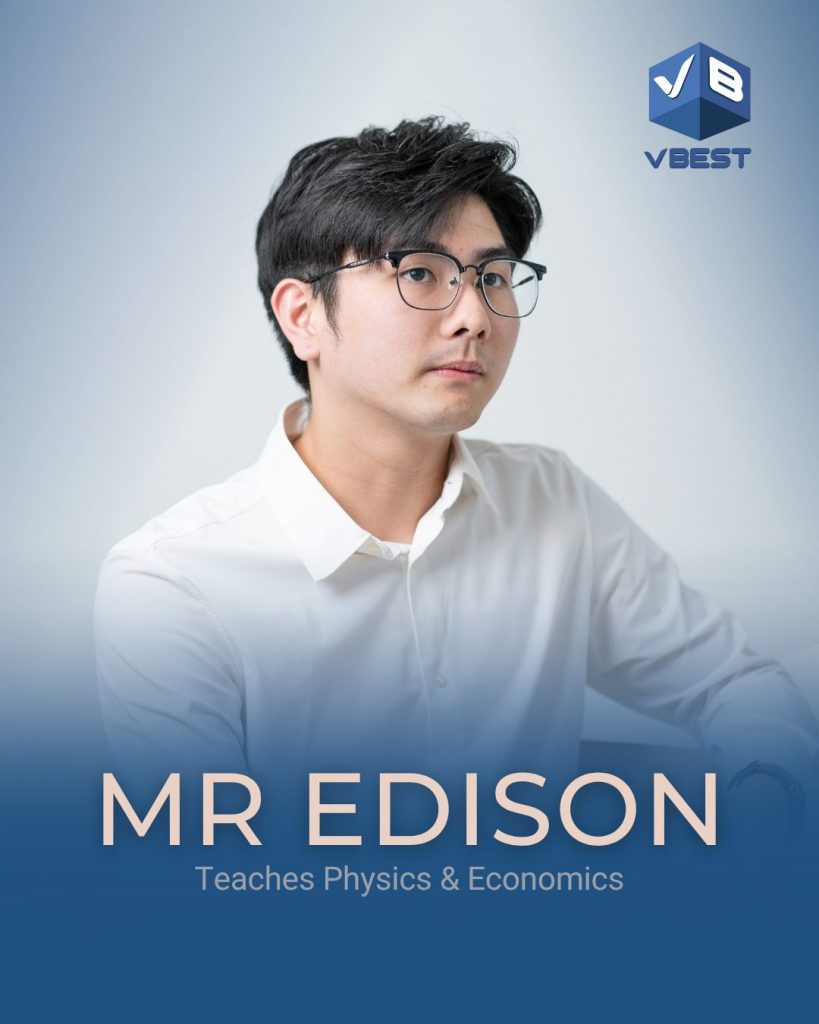
Mr Edison
1.0 THE BASIC ECONOMIC PROBLEM
1.1 The nature of the economic problem
1.2 Factor of production
1.3 Opportunity Cost
1.4 Production possibility curve (PPC) diagrams
2.0 ALLOCATION OF RESOURCES
2.1 Microeconomics & Macroeconomics
2.2 The role of markets in allocating resources
2.3 Demand
2.4 Supply
2.5 Price determination
2.6 Price Changes
2.7 Price elasticity of demand (PED)
2.8 Price elasticity of supply (PES)
2.9 Market economic system
2.10 Market Failure
2.11 Mixed Economic System
3.0 MICROECONOMIC DECISION MAKERS
3.1 Money & Banking
3.2 Household
3.3 Worker
3.4 Trade Union
3.5 Firms
3.6 Firms and production
3.7 Firms’ costs, revenue and objectives
3.8 Market Structure
4.0 GOVERNMENT AND THE MACROECONOMY
4.1 Role of Government
4.2 The macroeconomic aims of government
4.3 Fiscal Policy
4.4 Monetary Policy
4.5 Supply-side Policy
4.6 Economics Growth
4.7 Employment and Unemployment
4.8 Inflation and Deflation
5.0 ECONOMIC DEVELOPMENT
5.1 Living standard
5.2 Poverty
5.3 Population
5.4 Differences in economic development between countries
6.0 INTERNATIONAL TRADE AND GLOBALISATION
6.1 International specialisation
6.2 Globalisation, free trade and protection
6.3 Foreign exchange rates
6.4 Current account of a balance of payment
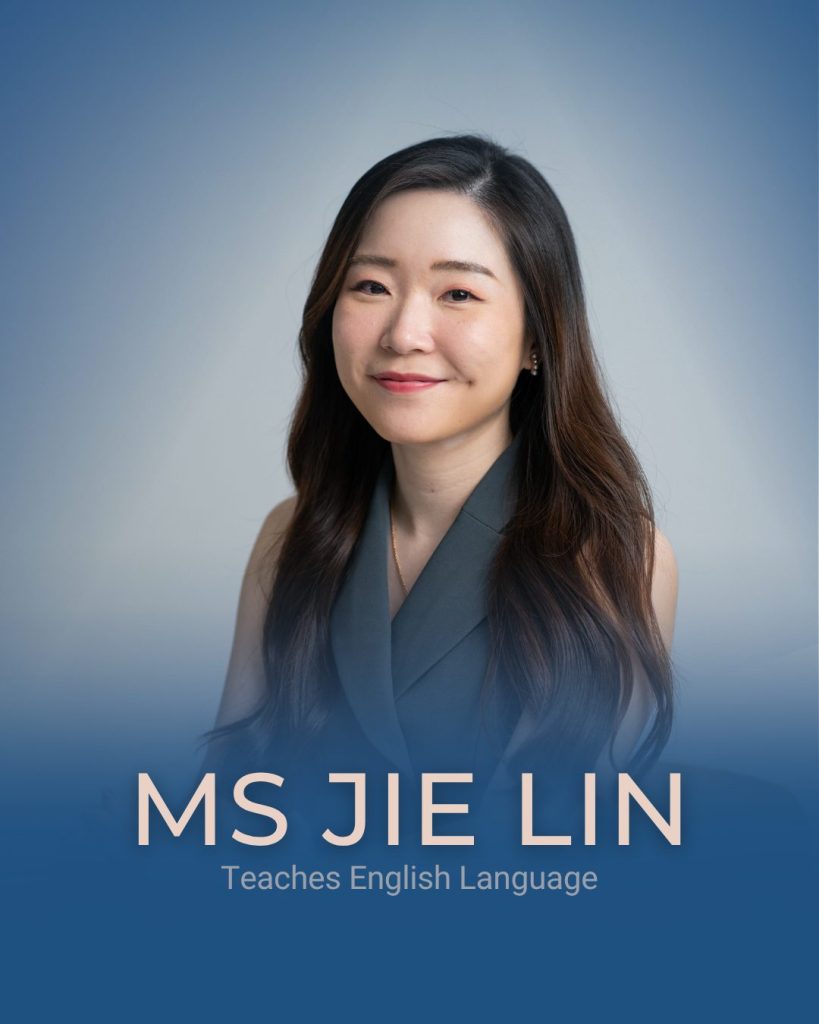
English
Ms Jie Lin
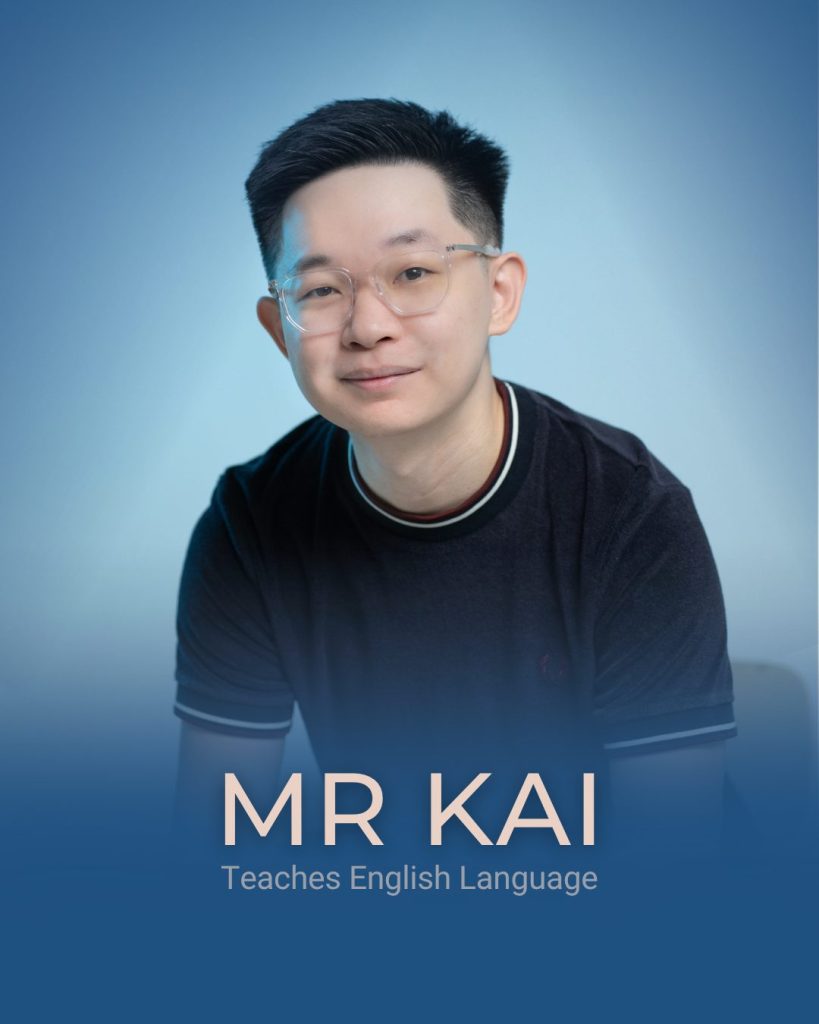
Mr Kai
1 Reading Comprehension
- Different question types
- Explicit vs implicit questions
- Sample questions
- Sample answers
1. Numbers
2. Algebra
3. Straight line graph
4. Geometry
5. Mensuration
6. Set
7. Probability
8. Functions
9. Graph of Functions
- Straight Line Graph
- Parallel & Perpendicular Lines
- Perpendicular Bisector
- Different Type of Graphs
- Interpreting graph of function
10. Speed-Time & Distance-Time Graph
11. Statistics
- Mean, mode, median
- Cumulative frequency graph, histogram, scatter diagram, stem and leaf diagram, box & whisker plot
12. Derivative of Function
13. Transformation
14. Vectors
Physics
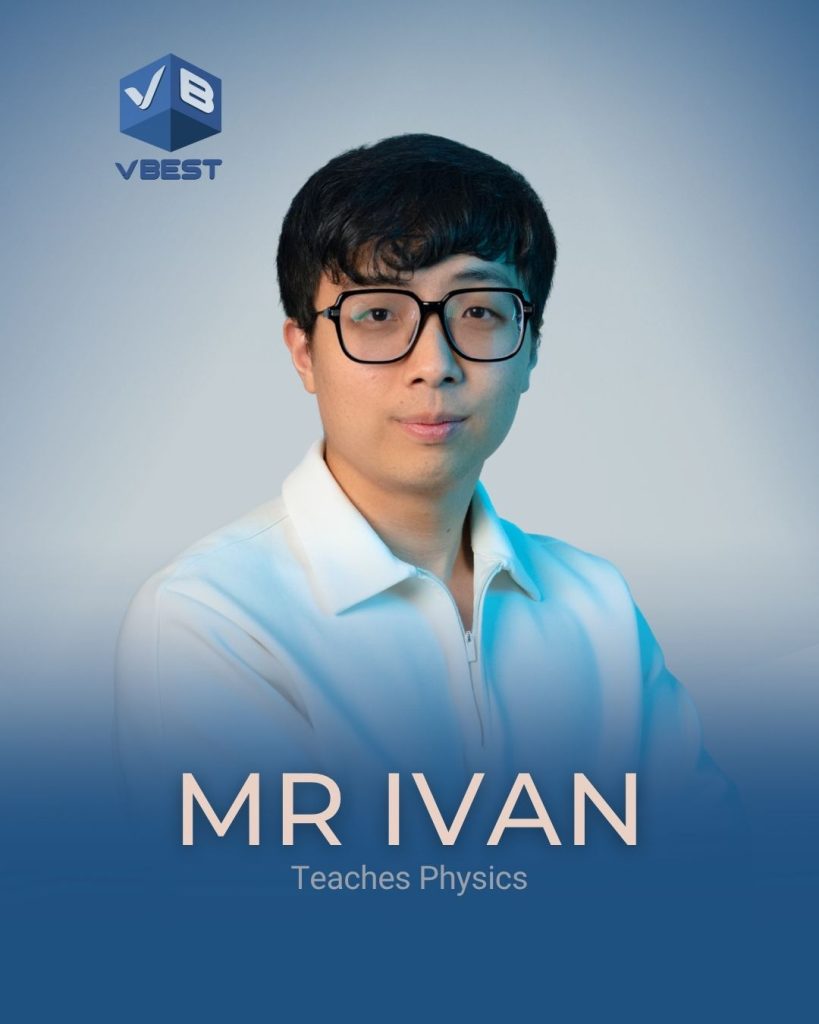
Mr Ivan & Mr Edison
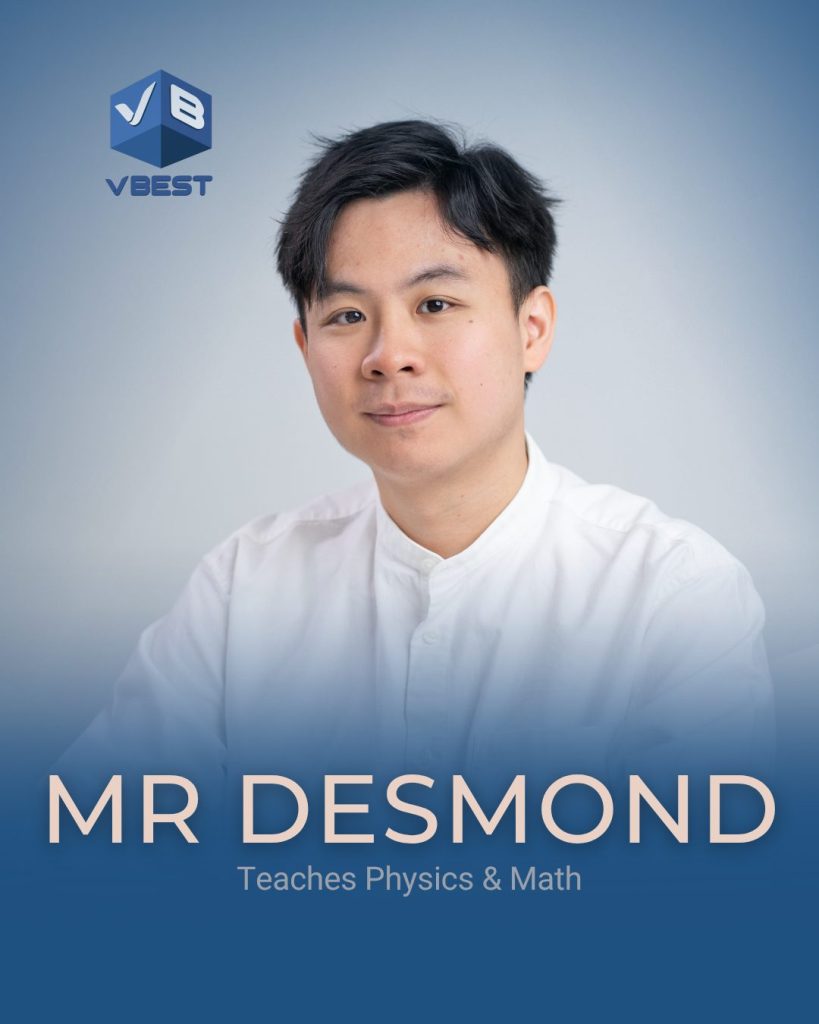
Mr Desmond
1.1 Measuring Techniques
1.2 Speed, Velocity, Acceleration
1.3 Mass Weight Density
1.4 Hookes Law and Turning effect
1.5 Momentum
1.6 Energy
1.7 Pressure
2.1 Kinetic Molecular Model of Matter
2.2 Specific Heat Capacity
2.3 Transfer of thermal energy
3.1 Waves
3.2 Light Waves
3.3 Lens Dispersion
4.1 Magnetism
4.2 Electric Charge and Current PD
4.3 Circuits
4.4 Circuit Component
4.5 Electromagnetic Induction
4.6 Force Carrying Conductor
5.1 Nuclear & Radioactivity
5.2 Half Life
6.1 Space Physics
6.2 Stars n The Universe


 English
 中文
中文
 日本語
日本語
 한국인
한국인
 Bahasa Melayu